
If you are a London driver who has spotted cloudy, bubbling or flaking paint on your bonnet, roof or doors, it can look as though the whole car needs repainting. Often, the problem is clear coat failure, where the transparent protective layer above the colour has begun separating. Auto King in Bethnal Green can assess how far the damage has spread and whether you need a localised repair, a panel respray or more extensive paintwork.
Quick Answer: Clear coat peeling happens when the transparent protective layer above your car’s colour loses adhesion and begins separating. Age, UV exposure and poor previous paint application can contribute. Once genuine peeling starts, polishing or a touch-up pen cannot reattach the failed coating. Proper repair normally involves removing unstable paint and refinishing the affected panel.
What Causes Clear Coat to Peel?
Most modern automotive finishes use a layered paint system. The base coat provides the colour, while a transparent clear coat above it adds gloss and protects the finish from weathering, UV exposure and minor surface abrasion. Peeling develops when this upper layer deteriorates or loses adhesion to the paint beneath it.
UV Exposure and Ageing
Cars kept outdoors are continually exposed to sunlight, temperature changes, rain and pollution. Over time, this can contribute to paint deterioration. Horizontal areas such as the bonnet, roof and boot lid are often prominent problem areas because of their exposure.
A few hot days will not normally make healthy clear coat suddenly peel. Clear coat failure tends to develop gradually and may involve a combination of age, environmental exposure and the condition of the original or previously repaired paint.
Poor Previous Paint Application
If one panel starts peeling while neighbouring factory-painted panels remain sound, an earlier body repair may be involved.
Paint manufacturers identify causes of clear coat delamination such as incorrect application, insufficient drying, poor preparation and mixing errors. A panel can therefore look acceptable when it leaves a body shop but begin lifting later if the coating did not bond correctly.
This is why surface preparation matters just as much as the final spray coat.
Contamination and Harsh Washing
Bird droppings, tree sap, road grime and other contaminants can stain or etch automotive paint if they remain on the surface. Regular, careful washing helps maintain paint that is still healthy, but it cannot reverse a clear coat layer that has already started separating.
Pressure washing is unlikely to strip properly bonded factory clear coat. However, once an edge is already lifting, strong water pressure or abrasive washing can get underneath the damaged coating and make an existing failure spread faster.
Can Clear Coat Peeling Be Buffed Out or Touched Up?
No. Genuine peeling cannot be permanently repaired with polishing, wax or a touch-up pen.
Light haze, swirl marks or very shallow scratches may sometimes improve through polishing because the clear coat is still present and bonded to the panel. Peeling is different. Part of the coating has physically separated or disappeared, and polishing cannot replace it.
A touch-up pen is useful for certain small paint chips, but it is not designed to rebuild a failed transparent coating across a panel. Wax can help protect healthy paint but cannot bond loose clear coat back onto the base layer.
DIY aerosol clear coat can sometimes improve appearance temporarily when the surface is prepared correctly. Simply spraying new lacquer over loose or poorly bonded clear coat, however, leaves the original failure underneath and is unlikely to produce a durable professional finish.
What Happens If I Leave Clear Coat Peeling Untreated?
Clear coat peeling does not heal or rebond on its own. Once an edge has lifted, weather, washing and normal use can allow the damaged area to grow.
Leaving car paint flaking untreated can lead to:
- a larger peeling area
- uneven fading of exposed colour
- obvious differences in gloss
- more preparation work when the panel is eventually repaired
- poorer cosmetic appearance and resale presentation
Clear coat peeling does not automatically mean the metal beneath is rusting. Automotive paint systems contain other layers underneath the clear coat.
However, if deterioration or separate damage eventually reaches the primer and exposes bare steel, moisture and road salt can increase the risk of corrosion. Repairing deteriorating paint before it reaches that stage can keep a cosmetic problem from becoming a more involved body repair.
How Is Clear Coat Peeling Repaired?
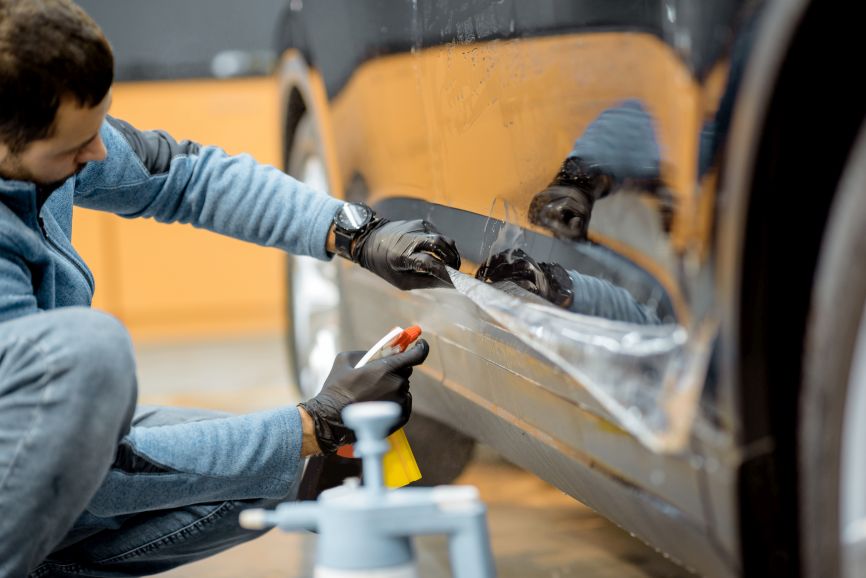
A proper clear coat peeling repair is a refinishing job rather than a detailing treatment. The exact process depends on how much of the existing paint system has failed.
1. Inspect the Paint Failure
A technician first checks whether the problem is limited to the clear coat or whether the base coat, primer or a previous repair is also affected. The visible peeling edge may not show the full extent of poor adhesion.
2. Remove Unstable Coating
Loose and poorly bonded material must be sanded away. The damaged edge is feathered into stable surrounding paint so there is a sound surface for refinishing.
Spraying straight over loose clear coat would simply trap the original problem underneath the new finish.
3. Prepare the Panel
The area is cleaned and degreased, and scratches, chips or other defects are corrected. Primer may be required if preparation has reached deeper layers of the paint system.
4. Restore the Colour Coat
If the base colour is exposed, damaged or affected during sanding, new colour is applied. Correct matching matters, particularly on older vehicles where the surrounding paint may have faded slightly.
Metallic and pearlescent finishes can require extra care because spray technique affects how the pigment appears in different light.
5. Apply Clear Coat and Finish
New clear coat is sprayed over the prepared colour layer and allowed to cure. The finished panel can then be inspected and refined where needed to restore an even gloss.
If clear coat failure affects several panels rather than one isolated area, Full car painting may become more practical than repairing damaged panels individually.
How Much Does Clear Coat Repair Cost in the UK?
The cost depends heavily on the amount of preparation and repainting needed. Small lacquer defects can be relatively inexpensive, while true peeling that requires a complete panel respray costs considerably more.
A useful UK guide is:
| Repair required | Indicative UK cost |
| Minor clear-coat defect or cosmetic repair | £50–£150 |
| Localised paint/lacquer repair | £150–£400 |
| Professional single-panel respray | Around £350–£700 |
| Multiple-panel repair | £700+ depending on extent |
These are indicative national ranges rather than fixed Auto King prices.
Your actual clear coat repair cost in the UK can vary according to:
- panel size
- how much failed coating needs removing
- vehicle make and model
- solid, metallic or pearlescent paint
- dents or corrosion needing additional repair
- colour-matching requirements
- London labour rates
For drivers in Bethnal Green and East London, inspecting the vehicle in person is the most reliable way to decide whether a localised repair is appropriate or whether the whole panel should be refinished.
Frequently Asked Questions (FAQs)
Is Clear Coat Peeling Covered by Insurance?
It depends on the cause and the policy.
Gradual deterioration, ageing and general wear are usually treated differently from accidental damage. If the paint failure appeared after an accident, vandalism or another identifiable insured event, check the terms of your policy and your excess before arranging a repair.
Can I Drive With Clear Coat Peeling?
Yes, in most cases.
Clear coat peeling is mainly a cosmetic paint defect and does not normally make a vehicle mechanically unsafe.
It is still worth dealing with before the damaged area spreads and increases the amount of refinishing required.
How Long Does a Repainted Panel Last?
There is no universal lifespan, but a correctly prepared and professionally refinished panel can remain in good condition for many years.
Longevity depends on preparation, paint materials, curing, UV exposure, washing methods and general care. If poorly bonded material is left beneath the repair, premature peeling becomes much more likely.
Does Clear Coat Peeling Affect My MOT?
Clear coat peeling on its own is not normally an MOT failure.
The UK MOT body inspection focuses on safety-related defects such as seriously corroded structural areas, dangerous body damage or insecure panels. Cosmetic lacquer peeling is not a standalone MOT defect.
However, serious corrosion or unsafe bodywork is a separate issue and can affect the MOT result.
Get Peeling Paint Checked Before It Spreads
Clear coat failure can look alarming, but one peeling panel does not automatically mean the whole vehicle needs repainting. What matters is how far the coating has lost adhesion and whether the colour and primer underneath remain sound.
Polishing, wax and quick touch-up products cannot permanently fix genuine delamination. A lasting repair requires removing unstable material and rebuilding the finish on a properly prepared surface.
If you have hazy, bubbling or flaking paint, Auto King in Bethnal Green can inspect the affected area and recommend the most appropriate repair. Where deterioration affects several panels, our full respray service can provide a more complete solution with proper preparation, colour matching and clear-coat refinishing.