
If you are a London driver worried that a scratch, dent or damaged panel will come back looking like an obvious patch, professional colour matching car paint is designed to prevent that. At Auto King in Bethnal Green, accurate colour selection, careful preparation and blending help repaired paintwork sit naturally alongside the finish already on your vehicle.
Quick Answer: Paint colour matching starts with your car’s manufacturer paint code, which provides the baseline formula. A technician then compares that formula with the paint actually on the vehicle, selects or adjusts the closest variant and blends the repair where necessary, helping compensate for ageing, finish variations and differences the paint code alone cannot always reproduce.
Where Does the Paint Colour Code Come From?
Vehicle manufacturers assign paint codes to identify the original factory colour and help repairers find the correct formulation.
The exact location varies by manufacturer. Common places include:
- the driver’s door jamb or door shut
- a vehicle information label under the bonnet
- the boot or spare-wheel area
- manufacturer records or vehicle documentation
It is important not to confuse the paint code with the VIN. The Vehicle Identification Number identifies the vehicle, while the paint code identifies its original colour specification.
For matching paint colour to a car, the manufacturer code is therefore the starting point rather than a guarantee of the final match.
Why Doesn’t the Paint Code Alone Guarantee a Perfect Match?
This is where many DIY repairs go wrong.
A car that has spent years outside on London streets has been exposed to sunlight, weather, washing, contaminants and normal wear. Freshly mixed paint has not experienced those conditions.
As a result, the original factory formula may be technically correct but still look slightly different beside the existing finish.
There can also be several recognised variants of the same factory colour. Professional refinishing systems can compare the paint already on the vehicle with digital colour databases and help identify the closest available formula rather than relying purely on the code.
A typical professional process may involve:
- identifying the manufacturer paint code
- cleaning and inspecting the existing paint
- measuring the colour with a spectrophotometer where available
- comparing possible paint variants
- accurately mixing the selected formula
- carrying out a spray-out test if required
- blending the repair where necessary
That final assessment is what separates professional colour matching from simply ordering a tin with the correct code printed on the label.
How Does a Spectrophotometer Match Car Paint?
A spectrophotometer measures how the existing paint reflects light. Automotive versions can take readings from several angles, which is particularly useful for modern metallic and pearl finishes.
The readings are compared against digital paint databases to help identify the closest formula or manufacturer variant.
However, a spectrophotometer does not automatically create a perfect repair. The technician still needs to consider:
- the condition of the original paint
- surface preparation
- accurate paint mixing
- spraying technique
- lighting and viewing angle
- whether blending is required
The technology improves accuracy, but experience and application still matter.
Why Are Metallic and Pearl Paints Harder to Match?
Solid colours are generally more straightforward than metallic and pearl finishes.
Metallic and pearl paints contain reflective particles that interact with light. Their appearance can change depending on the viewing angle, lighting and how the coating was sprayed.
That means a metallic silver repair might look correct when viewed straight on but slightly different from the side if the paint has been applied differently.
Complex effect finishes therefore require more than simply matching the basic colour. The technician must also consider how the particles sit in the coating and how the finish behaves under different lighting.
So, does paint match perfectly after a repair? A properly completed professional repair should be very difficult to distinguish under normal viewing conditions. Achieving that result depends on accurate colour selection, preparation and application rather than the paint code alone.
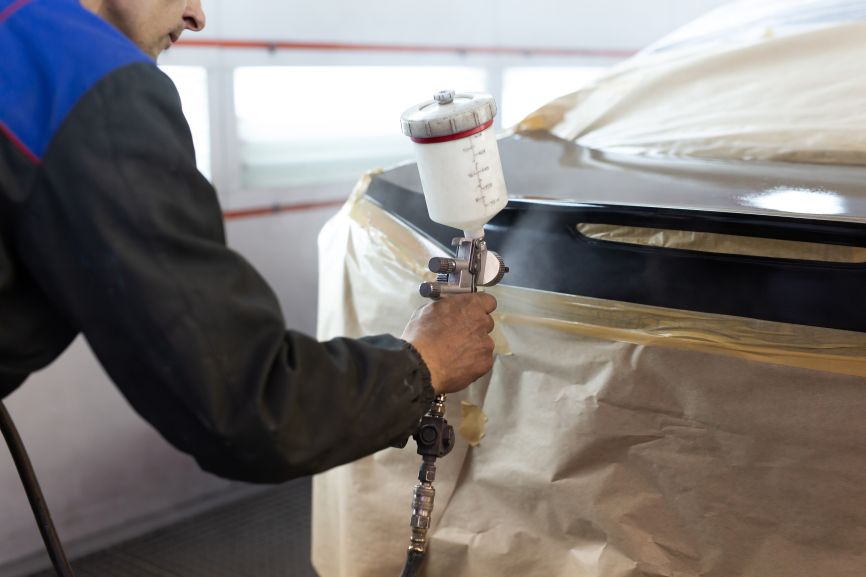
What Is Paint Blending and Why Does It Matter?
Paint blending is a refinishing technique used to make small colour differences much harder to see.
Rather than creating a sharp boundary between new and existing paint, the painter gradually feathers the new colour through the appropriate repair or blend area.
Think of two almost identical shades placed directly next to each other. A hard dividing line makes the difference obvious. A gradual transition makes that difference far less noticeable.
Blending may be useful when:
- the repair is close to a panel edge
- several factory colour variants exist
- the existing finish has changed with age
- metallic or pearl paint is involved
- a direct transition might otherwise be visible
However, blending into neighbouring panels is not automatically required for every repair. The correct approach depends on the colour, damage location, paint system and quality of the initial match.
For repairs where appearance matters, Auto King provides professional Colour Matching and Blending in Bethnal Green to help avoid the patchwork effect drivers often worry about.
Small Spot Repair vs Full Panel Respray: Which Gives a Better Match?
Neither option is always better. It depends on the type and extent of the damage.
When is a spot repair suitable?
A localised repair can work well for:
- small stone chips
- minor scratches
- bumper scuffs
- limited areas of paint damage
SMART repair techniques focus on the damaged area instead of repainting more of the vehicle than necessary.
For a tiny stone chip, for example, repainting an entire door would usually be excessive.
When might a full panel respray be better?
A larger repair may be more appropriate for:
- long or deep scratches
- extensive paint damage
- widespread clear-coat failure
- poor previous repairs
- larger dents that require refinishing
A full panel respray gives the technician greater control over preparation, colour application and the final surface finish.
If clear coat is already peeling around the repair area, adding colour to the visible patch alone will not solve the problem. The unstable coating first needs proper preparation before refinishing.
How Much Does Colour Matching Car Paint Cost in the UK?
Colour matching is usually included within the overall paint repair rather than charged as a separate fixed-price service.
Typical UK prices vary according to the size of the damage, paint type, preparation required and whether blending is necessary.
| Repair type | Typical UK cost | Typical repair time |
| Small chip or scratch repair | £60–£210 | A few hours |
| Bumper respray | Around £280 | Often around 1 day |
| Single-panel respray | Around £400 | Around 1 day |
| Larger or multi-panel repair | £400+ | Around 2–3 days or more |
These figures are general UK guide prices rather than Auto King quotations. London labour costs, metallic or pearl finishes, dent repair, corrosion and additional preparation can all increase the final price.
When comparing quotes, check what is actually included. A cheaper repair may not include the same level of preparation, blending or finishing.
Can Touch-Up Paint Match My Car Exactly?
Sometimes it can be very close, but a bottle carrying the correct paint code for your car is not guaranteed to disappear perfectly into the surrounding paint.
Touch-up paint can be useful for a tiny stone chip where the priority is protecting the exposed area and making the damage less noticeable.
A larger scratch is different. As the repair area increases, differences in colour, gloss and surface texture become easier to spot.
DIY touch-up products also cannot replicate every stage of a professional paint repair, particularly when colour adjustment, spray technique and blending are needed.
If the damaged area is highly visible, professional refinishing is usually the safer option for a seamless-looking result.
FAQs About Car Paint Colour Matching
Can any garage colour match my car?
Not necessarily to the same standard. High-quality colour matching requires suitable paint information, refinishing equipment and experience. Professional body repairers may also use spectrophotometers, digital colour databases and computerised mixing systems to improve accuracy.
Does colour matching work on metallic or pearl paint?
Yes. Metallic and pearl finishes can be professionally matched, although they are generally more challenging than solid colours because reflective particles affect how the paint appears from different angles and in different lighting.
How long does colour-matched paint take to fully cure?
There is no single curing time for every repair. It depends on the paint system, products used, temperature and drying equipment. A vehicle may be ready for collection before the coating has reached its final cure, so follow the repairer’s advice about washing, polishing or applying protective products.
Will a colour match look different in sunlight and shade?
It can, particularly with metallic, pearl and other effect finishes. Professional technicians therefore check colour carefully under suitable lighting and may use a spray-out test before completing the repair.
What is the hardest car paint colour to match?
There is no single colour that is always hardest. Complex metallic, pearl and multi-stage effect finishes tend to be more demanding because viewing angle, lighting and application technique can all influence how the final colour appears.
Get a Repair That Doesn’t Look Repaired
The real skill behind colour matching car paint is not simply finding the manufacturer paint code. It is comparing that specification with the paint currently on the vehicle, selecting the closest formula, applying it correctly and blending where required so there is no obvious repair boundary.
If scratches, damaged paintwork or a previous repair are leaving your vehicle looking patchy, Auto King in Bethnal Green, East London can assess the damage and recommend the right refinishing method. Learn more about our colour matching and blending service for a finish designed to sit naturally alongside your existing paintwork.
Book an appointment online or Call us at 020 3877 6667