
For London drivers who have just noticed a chip on the bonnet, bumper or wing, the main concerns are usually rust, appearance and repair cost. Although the damage may look tiny, a deep chip can expose the panel beneath the paint and become harder to repair if ignored. Auto King helps drivers in Bethnal Green and across London assess paint damage and choose a practical repair before it spreads.
Quick Answer: Car paint chip repair typically costs around £10–£40 for a DIY touch-up kit or £60–£150 for a professional localised repair. Chips that expose steel can begin corroding in damp or salty conditions, so cleaning, sealing or professionally repairing them promptly can prevent a larger paintwork problem.
What Causes Stone Chips on Car Paint?
Stone chips form when gravel, road debris or loose pieces of road surface strike a vehicle hard enough to break through the clear coat and coloured paint.
The areas most likely to be affected include:
- The leading edge of the bonnet
- Front bumper
- Front wings and wheel arches
- Door mirrors
- Lower door sections
- The roof edge above the windscreen
These parts face the direction of travel and receive the greatest exposure to debris thrown up by other vehicles.
Loose gravel and following distance
Vehicle tyres can throw loose stones backwards, especially on damaged roads, gravel-covered surfaces and unfinished road repairs. Following a car, van or lorry too closely gives the debris less time to lose speed before reaching your vehicle.
Leaving a sensible following distance will not prevent every chip, but it can reduce your exposure to stones thrown up by traffic ahead.
Motorway driving
Even a small stone can cause noticeable damage when it hits at motorway speed. Drivers who regularly use the A12, A13, M11 or M25 may gradually see clusters of small marks appearing across the bonnet and bumper.
The risk increases during busy journeys when vehicles are travelling closely together at higher speeds.
Roadworks and resurfaced roads
Freshly resurfaced roads can contain loose aggregate before the surface has fully settled. Temporary repairs and unfinished road edges can also leave gravel in the path of passing vehicles.
This is common on busy London routes where traffic continues moving alongside staged roadworks.
Winter grit and road salt
Winter grit can strike paintwork in the same way as loose gravel. Road salt does not normally cause the initial chip, but it can speed up corrosion if the damage has exposed steel.
Hail, branches and debris from poorly secured vehicle loads can also chip paint, although everyday road stones are the most common cause.
Will a Stone Chip Rust If I Leave It?
A stone chip can rust if it reaches bare steel, but not every chip exposes metal and not every vehicle panel is made from steel.
Modern car paint usually includes several layers:
- A prepared or treated panel surface
- Primer
- Coloured base coat
- Protective clear coat
A chip limited to the clear coat is mainly cosmetic. If the impact cuts through the colour and primer on a steel panel, moisture and oxygen can reach the metal and begin the corrosion process.
There is no exact timeline for every chip. The speed of corrosion depends on:
- The depth of the damage
- Whether steel is exposed
- Rain and humidity
- Road salt and grime
- Where the vehicle is stored
- How quickly the chip is cleaned and protected
A clean vehicle kept indoors may remain unaffected for longer than one driven daily through rain and salted roads. The safest approach is to repair exposed paintwork before visible rust develops.
Do chips on plastic bumpers rust?
Plastic bumpers do not develop metal rust. However, chipped bumper paint can still peel, collect dirt and become more noticeable.
Some cars also have aluminium panels. Aluminium does not produce the orange-brown rust associated with steel, but it can oxidise and suffer coating damage.
What are the signs of rust around a paint chip?
Inspect the chip in daylight after gently cleaning it. Warning signs include:
- An orange or brown centre
- Dark staining around the edge
- Paint beginning to lift
- Small bubbles near the chip
- A rough or flaky surface
Bubbling may mean corrosion has spread beneath the surrounding paint. Covering it with a paint pen will not remove the rust and may trap the problem underneath.
If your damage is a line rather than a small chip, read our guide on how to fix a scratch on car paint.
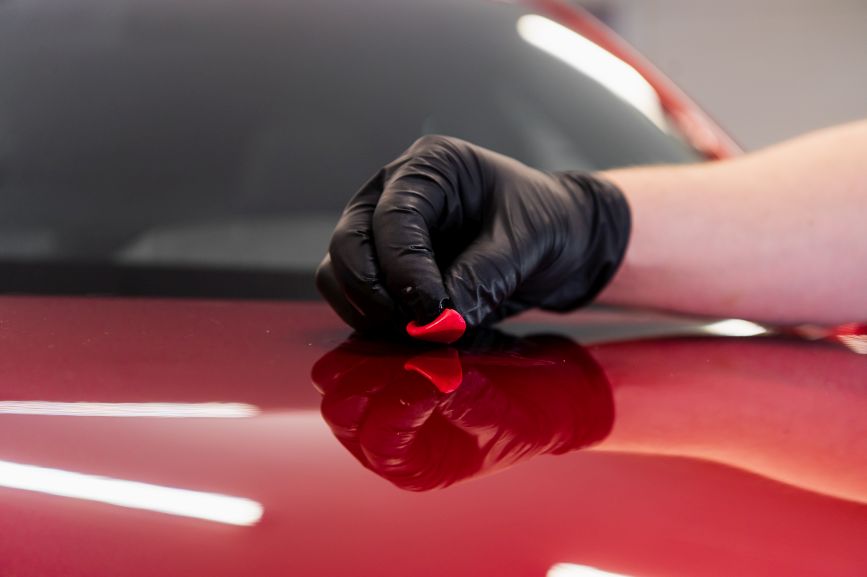
Can I Fix a Stone Chip Myself With a Touch-Up Paint Pen?
A touch-up paint pen can be suitable for one or two tiny, clean chips, particularly when the aim is to cover exposed metal and make the mark less noticeable.
DIY products generally cost around £10–£40, depending on whether the kit includes only colour or also provides primer, clear coat and preparation materials.
A basic DIY repair usually involves:
- Washing and drying the area
- Removing wax, grease and contamination
- Checking for rust or loose paint
- Applying primer if required
- Building up thin layers of colour
- Adding clear coat where necessary
- Allowing the coating to cure
Follow the product instructions carefully. Applying one thick drop often creates a raised blob that looks more noticeable than the original chip.
When is a touch-up pen suitable?
DIY touch-up paint may be reasonable when:
- The chip is only a few millimetres wide
- There is no rust or bubbling
- The surrounding paint is secure
- The vehicle has a simple solid colour
- A slightly visible repair is acceptable
A paint pen can protect a small chip, but it will not always produce an invisible finish.
Why can touch-up paint look patchy?
A manufacturer’s paint code identifies the original colour formula, but the finish on the vehicle may have changed because of sunlight, age, polishing or previous repairs.
Metallic and pearl paints are particularly difficult to match. Their appearance depends on how reflective particles sit in the coating, which is difficult to reproduce with a small brush or pen.
The repaired area may therefore look darker, lighter or flatter from certain angles, even when the correct paint code is used.
When should you avoid DIY repair?
Professional repair is normally better when:
- Rust is visible
- The paint is bubbling or lifting
- Several chips are grouped together
- The damage is highly visible
- The chip is wide or deep
- The car has metallic or pearl paint
- You want the repair blended into the panel
A touch-up pen will not correct failing lacquer. For larger areas of lifting paint, see our guide to clear coat peeling.
How Does Professional Stone Chip Repair Work?
Professional car paint chip repair involves preparing and rebuilding the damaged layers rather than simply placing paint over the mark.
1. Inspecting the chip
The technician checks the depth of the damage, panel material, loose paint, corrosion and any previous repair products.
This determines whether the chip needs an individual touch-in, a SMART repair or work across a larger section of the panel.
2. Cleaning and preparation
Wax, road film, grease and dirt are removed so the repair materials can bond correctly. Loose paint is carefully dealt with, while any corrosion must be removed or treated before painting.
3. Filling the damaged area
Primer may be applied if the underlying surface is exposed. Colour-matched paint is then built up in thin layers.
Deeper chips may need several applications to bring the repaired area level with the surrounding finish.
4. Colour matching and blending
The paint code provides a starting formula, but the technician must also account for ageing, fading and the type of finish.
For larger chips or groups of damage, colour may be blended into the surrounding area to reduce the visible transition between old and new paint.
5. Clear coat and polishing
Clear coat restores gloss and protects the colour layer. Once the repair has cured sufficiently, it may be carefully levelled and polished.
The final result depends on the location and severity of the chip. A professional should explain whether the repair is expected to be almost invisible or mainly intended to seal and improve the damage.
How Much Does Stone Chip Repair Cost in the UK?
UK stone chip repair can cost from around £10 for a basic DIY product to £600 or more when widespread damage requires a full panel respray.
These prices are indicative. Final costs depend on the vehicle, paint finish, repairer and extent of the damage.
| Chip situation | Indicative UK cost | Typical turnaround |
| DIY touch-up kit | £10–£40 | Same-day application |
| One or two small professional touch-ins | £60–£100 | Often same day |
| Localised SMART repair | £100–£200 | Same day or next day |
| Multiple chips across one area | £150–£300 | Around 1–2 days |
| Chips requiring corrosion treatment | £150–£350+ | Around 2–3 days |
| Full bonnet or panel respray | £250–£600+ | Several days |
Professional repairs are often priced by area or panel rather than by the number of individual chips.
Factors affecting the price include:
- Number and depth of chips
- Presence of corrosion
- Panel material
- Solid, metallic or pearl paint
- Amount of blending required
- Panel size and location
- Other scratches or dents
When comparing quotes, check whether preparation, rust treatment, primer, colour, clear coat, blending and polishing are included.
How Can You Prevent More Stone Chips?
You cannot prevent every impact, but you can reduce unnecessary exposure by:
- Leaving more space behind other vehicles
- Slowing down on loose or resurfaced roads
- Avoiding unfinished road edges
- Washing away winter grit and salt
- Checking the bonnet after motorway journeys
- Repairing fresh chips promptly
Wax and ceramic coatings help with cleaning and contamination, but they are not thick enough to stop every stone. Paint protection film provides a stronger physical barrier for vulnerable areas such as the bonnet and bumper.
Frequently Asked Questions
How many stone chips are too many to touch up individually?
There is no fixed number. If dozens of chips cover a bonnet or bumper, individual touch-ups may create an uneven appearance. A blended repair or panel respray may provide a more consistent result.
Do stone chips affect an MOT?
A small cosmetic stone chip will not normally cause an MOT failure. It may only become relevant if the resulting corrosion or body damage creates excessive structural deterioration or a dangerous sharp edge.
Can stone chip repair be completed on the same day?
Small, rust-free chips can often be repaired on the same day. Corrosion removal, extensive blending or a full panel respray will usually require more time.
Is a windscreen stone chip the same as a paint chip?
No. Windscreen chips damage laminated glass and are normally repaired using specialist resin. Paint chips affect the vehicle’s bodywork and require paint preparation and refinishing.
Is it worth repairing a chip on a plastic bumper?
Yes, particularly if the paint is peeling or the damage is prominent. Plastic will not rust like steel, but the coating can continue to deteriorate.
Repair Small Paint Chips Before They Spread
A small chip may not require major bodywork, but it should be checked if the panel beneath the paint is exposed. Repairing the damage early is usually simpler and less expensive than treating corrosion or peeling paint later.
Auto King provides professional stone chip and paint repair at its garage in Bethnal Green, East London, E2 0LQ. Our technicians can assess the damage, explain whether a touch-in or blended repair is appropriate and provide a clear quote before work begins.
Book an appointment online or Call us at 020 3877 6667