
If you are a London driver who has just hit a pothole on the A12, Mile End Road or an uneven East London side street, that heavy jolt can leave you wondering whether your car is still safe. Pothole damage to tyres and alignment is not always immediately obvious, and carrying on without checking could lead to a slow puncture, unstable steering or premature tyre wear. At Auto King in Bethnal Green, we inspect tyres, wheels, alignment and suspension so local drivers can identify impact damage before it becomes a more expensive problem.
Quick Answer: How Can You Tell If a Pothole Damaged Your Car?
After hitting a pothole, check for:
- A bulge, cut or split in the tyre sidewall
- A tyre pressure warning or repeated pressure loss
- A bent or cracked wheel rim
- Shaking through the steering wheel
- A steering wheel that no longer sits straight
- The car pulling or drifting to one side
- New knocking or clunking sounds
- Uneven tyre wear developing over the following weeks
Stop somewhere safe before carrying out a visual check. If the tyre is visibly flat, badly cut or bulging, do not continue driving on it.
What Can a Pothole Impact Actually Damage?
A pothole does more than make the journey uncomfortable. When the wheel drops into a hole and strikes its edge, the tyre can become trapped between the road and the metal rim. The force travels through the wheel into the steering and suspension.
The amount of damage depends on the pothole’s depth, the speed of the car, tyre pressure, wheel size and the angle of impact.
Tyre sidewall
The sidewall flexes whenever the tyre rolls. A hard pothole impact can crush it against the rim, snapping or weakening the internal cords beneath the rubber.
This may leave:
- A visible bubble or bulge
- A deep cut or gouge
- Internal damage with no immediate external mark
- A slow or sudden loss of pressure
Low-profile tyres have less sidewall between the road and the wheel, so there is less material available to absorb a sharp impact.
Wheel rim
Steel wheels can bend, whilst alloy wheels may dent or crack. A damaged rim can prevent the tyre from sealing correctly, causing repeated pressure loss.
A slight bend may also create vibration that becomes more noticeable as your speed increases.
Wheel alignment
The impact can alter the angles at which the wheels meet the road. These angles include toe, camber and caster.
Once those settings move outside the manufacturer’s specifications, the car may pull to one side, the steering wheel may sit crooked and the tyres may begin wearing unevenly. Auto King’s wheel alignment service in Bethnal Green checks these angles and adjusts them accurately where possible.
Suspension and steering components
A severe impact can damage or bend:
- Control arms
- Springs
- Shock absorbers
- Track rods
- Ball joints
- Suspension bushes
- Wheel bearings
New knocking noises, unstable handling or excessive bouncing should therefore be investigated rather than treated as a simple alignment issue.
How Can You Tell If a Pothole Damaged Your Tyre?
There is a bulge in the sidewall
A bubble, blister or lump usually means the internal structure has been damaged. The outer rubber may still be intact, but the weakened cords are no longer supporting the tyre correctly.
A structural bulge is unsafe because it can fail without much warning, particularly at motorway speeds. The UK MOT inspection manual treats lumps, bulges or tears caused by structural failure as tyre defects.
Do not press hard on a bulge or attempt to flatten it. Arrange a professional inspection and replacement.
There is a cut, split or exposed cord
Check both the outer sidewall and as much of the inner sidewall as you can see safely. Damage on the side facing the suspension is easy to miss.
A cut becomes particularly serious when:
- The internal cords are visible
- The rubber is separating
- The cut opens when the tyre flexes
- The tyre is losing pressure
Under the UK MOT inspection criteria, exposed ply or cord is a failure. A tyre can also fail its MOT if a cut exposes the ply or cord. Certain deep cuts are assessed according to their size and whether the tyre’s structural material can be seen or felt.
The tyre keeps losing pressure
A tyre may look normal immediately after the impact but lose air over the next several hours or days.
Possible causes include:
- A small split in the tyre
- Damage around the tyre bead
- A bent rim breaking the airtight seal
- Damage to the valve
- A puncture caused by road debris inside the pothole
Check the pressure when the tyre is cold and compare it with the figure on the vehicle’s pressure label or in the handbook. Do not inflate it beyond the manufacturer’s recommended pressure to compensate for a leak.
The pressure warning light appears
A tyre pressure monitoring system warning can indicate that one or more tyres have dropped below the expected pressure.
The warning does not identify why pressure has fallen, so resetting the system without inspecting the tyre could hide a continuing problem.
The car shakes after hitting a pothole
When a driver says, “I hit a pothole and now the car is shaking,” the cause is not necessarily alignment alone.
Shaking can result from:
- A bent wheel
- Wheel imbalance
- Internal tyre damage
- Uneven tyre pressure
- A damaged suspension component
Vibration that becomes stronger as road speed increases can point towards a bent wheel, damaged tyre or wheel-balancing problem. Shaking at low speed may indicate more substantial tyre or wheel distortion.
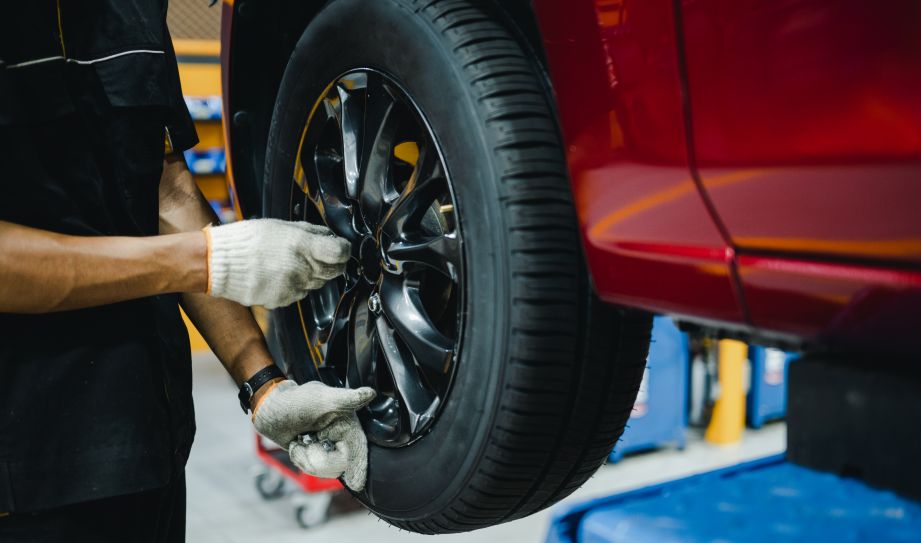
Can Sidewall Damage Be Repaired in the UK?
A puncture or structural defect in the sidewall cannot be repaired as a standard permanent repair under BS AU 159. Because the sidewall flexes heavily while driving, a bulge, split or pothole-related structural failure normally means the tyre must be replaced.
British Standard BS AU 159 controls how minor puncture repairs should be assessed and completed. Repairs are restricted to the permitted central tread area. Damage near the shoulder or sidewall falls outside that repair area because these sections flex heavily while driving.
TyreSafe advises that permanent puncture repairs should only be carried out by a specialist after the tyre has been removed from the wheel and inspected internally. It also confirms that punctures close to or on the sidewall cannot be repaired.
This means a pothole-related sidewall bulge, split or structural failure requires a replacement tyre, not a plug or patch. Auto King can examine the damage and advise whether you need a repair or new tyre fitting in Bethnal Green.
Does Hitting a Pothole Mess Up Your Alignment?
Yes. A sudden pothole impact can knock wheel alignment outside the manufacturer’s specified angles, even when there is no visible tyre damage.
If your steering wheel sits off-centre, the car drifts to one side or the tyres start wearing unevenly, these are common signs you need a wheel alignment.
The change can be small enough that you do not notice it immediately. You might only notice that you are making more steering corrections than usual or that the car feels slightly different on a familiar road.
The steering wheel is no longer centred
On a level, straight road, the steering wheel should sit close to its normal centred position.
If it is tilted left or right whilst the car travels straight, the alignment may have shifted. A crooked steering wheel can also follow steering or suspension damage, so it should be inspected rather than diagnosed by appearance alone.
The car pulls to one side after the pothole
A car pulling after a pothole is one of the most recognisable alignment symptoms.
Test this only on a safe, reasonably flat road. Many roads are built with a slight slope for drainage, which can create a gentle drift even when the alignment is correct.
A persistent or strong pull may be caused by:
- Incorrect wheel alignment
- Unequal tyre pressures
- Tyre damage
- A bent suspension component
- A sticking brake
- Uneven tyre wear
Auto King’s technicians check the tyres and steering components before making adjustments, because correcting the alignment alone will not solve a bent or worn suspension part.
The tyres start wearing unevenly
Alignment damage does not always produce an obvious symptom on the day of the impact. Instead, the affected tyre may scrub against the road at the wrong angle.
Over the following weeks, you might notice:
- Inner-edge wear
- Outer-edge wear
- Feathered tread blocks
- One front tyre wearing faster than the other
- A rough tread surface when you run your hand across it
Our guide to uneven tyre wear and what it means explains how different patterns can point towards alignment, pressure or suspension faults.
The car feels unstable or vague
Misalignment can make the steering feel less predictable. The car may wander within its lane, require frequent correction or feel less settled when changing direction.
A hard pothole hit can also damage suspension components, so unstable handling should be checked through a full suspension and steering inspection.
How Do You Know If the Wheel Is Bent After Hitting a Pothole?
Look at the outer lip of the wheel for:
- A flattened or dented section
- Fresh impact marks
- Cracks in an alloy wheel
- A gap between the tyre and rim
- Repeated pressure loss
A bent inner rim may not be visible while the wheel is fitted. The clearest symptoms are often vibration, tyre pressure loss or the wheel visibly moving from side to side when rotated on workshop equipment.
Do not assume cosmetic wheel damage is harmless. A crack can spread, and a bent rim may affect the tyre seal or place extra strain on the tyre.
What Should You Do Immediately After Hitting a Pothole?
1. Find a safe place to stop
Do not stop suddenly in moving traffic. Move to a safe parking area or side road before checking the vehicle.
When damage occurs on a motorway or another fast road, follow National Highways safety guidance and contact breakdown assistance if you cannot reach a safe place.
2. Inspect the tyres and wheels
Check for:
- Bulges and cuts
- A visibly low tyre
- Exposed cords
- Bent or cracked rims
- Fresh marks around the wheel
- Fluid or broken components beneath the car
Remember to inspect the inner sidewall where safely possible.
3. Check the tyre pressure
Use an accurate gauge when the tyres are cold. If one tyre is substantially lower than the others, avoid driving until the cause has been assessed.
4. Pay attention during the next journey
Note whether:
- The steering wheel shakes
- The car pulls left or right
- The wheel sits off-centre
- A warning light appears
- You hear knocking or scraping
- The car feels different while braking
Do not perform aggressive steering or braking tests. Normal driving should provide enough information.
5. Arrange a pothole damage tyre check
Book an inspection after a particularly hard impact, even if the vehicle initially appears normal. Internal tyre damage, minor wheel distortion and small alignment changes are difficult to identify at the roadside.
Take photographs of the pothole, road location, wheel and tyre if you may make a claim. Record the date, time, exact location and any repair invoices. The RAC advises contacting the council or organisation responsible for the road when pursuing a pothole damage claim.
Why Are Potholes a Recurring Problem for East London Drivers?
East London vehicles deal with stop-start traffic, speed humps, roadworks, utility repairs and heavily used routes every day. It is not always one dramatic hole that causes the problem. Repeated impacts across broken or patched road surfaces can gradually affect tyre condition, alignment and suspension.
Drivers travelling through Bethnal Green, Hackney, Whitechapel, Mile End and around the A12 may also have limited space to avoid road defects safely. Avoid sudden swerving or harsh braking when another road user is close. Reduce speed smoothly where it is safe to do so and keep firm control of the steering.
The RAC reported that pothole-related breakdowns continued to affect thousands of drivers during 2025, describing poor road surfaces as an ongoing problem across Britain.
How Much Does Pothole Damage Cost to Repair?
The final price depends on the vehicle and what has been damaged, but typical UK costs may include:
- Wheel alignment: approximately £40 to £90
- Budget or mid-range replacement tyre: often £60 to £150
- Premium or large low-profile tyre: commonly £150 to £250 or more
- Alloy wheel straightening or refurbishment: often £60 to £150 per wheel
- Suspension repairs: Replacement tyre and suspension costs vary considerably by tyre size, vehicle model and the component damaged. A basic alignment check is usually far less expensive than replacing tyres that have worn prematurely because the wheels were left misaligned
These figures are general estimates. Vehicle size, tyre specification, wheel design and the extent of damage all affect the quote.
Catching a £40 to £90 alignment issue before it ruins one or two tyres is usually far cheaper than waiting for visible tread wear.
Do Not Wait for the Symptoms to Get Worse
Tyre damage will not correct itself, and poor alignment continues to scrub away the tread every time you drive.
Waiting can turn:
- A small alignment correction into an early tyre replacement
- A slow leak into a flat tyre
- A minor wheel bend into continuing vibration
- A worn suspension joint into unstable handling
- One damaged tyre into a roadside breakdown
Here’s the thing, the vehicle may still drive even when something is wrong. That does not mean the tyre, wheel or suspension is safe.
Book a Free Post-Pothole Check at Auto King
If you have hit a pothole in Bethnal Green or elsewhere in East London, Auto King offers a free initial post-pothole inspection covering visible tyre, wheel and alignment warning signs
Our technicians can inspect the sidewalls, tread, pressure, wheels, steering and suspension, then explain whether the vehicle needs an adjustment, repair or replacement. We will explain what we find and provide a clear quote before carrying out any paid repairs or adjustments.
Visit Auto King, 2-6 Portmans Place, Bethnal Green, London E2 0LQ, call 020 3877 6667, or book a professional wheel alignment check in Bethnal Green.
Frequently Asked Questions
How can I tell if a pothole damaged my tyre?
Look for a sidewall bulge, cut, split, exposed cord, low pressure or a tyre pressure warning. Repeated air loss after the impact may indicate tyre bead damage, a puncture or a bent rim. Internal damage is not always visible, so arrange an inspection after a hard impact.
Does hitting a pothole always damage wheel alignment?
No. A minor impact may cause no damage, but a deep pothole or sharp strike can move the wheel angles outside specification. Pulling, an off-centre steering wheel and uneven tyre wear are common signs.
Is it safe to drive with a bulge in the tyre?
No. A bulge usually indicates internal structural failure and creates a risk of sudden tyre failure. Avoid driving on it and arrange professional recovery or replacement.
Why is my car shaking after hitting a pothole?
The impact may have bent the wheel, damaged the tyre, disturbed wheel balance or affected the suspension. The speed at which the vibration occurs can provide a clue, but the wheel and tyre should be checked on workshop equipment.
How soon should alignment be checked after hitting a pothole?
Arrange a check promptly if the impact was severe or the steering feels different. Even without immediate symptoms, checking within the next few days can identify a small alignment change before it creates visible uneven tyre wear.
Can I claim from the council for pothole damage?
You may be able to submit a claim to the authority responsible for the road. Collect photographs, the exact location, the date and time, evidence of the damage and itemised repair estimates or invoices. Compensation is not automatic, as the authority may defend the claim by showing that it followed a reasonable road inspection and repair system.
Book an appointment online or Call us at 020 3877 6667