
For London drivers asking how often wheel alignment UK vehicles need, the frustrating answer is that there is no single fixed interval. Unlike an oil change, wheel alignment is usually affected by road impacts, tyre wear and suspension condition rather than the calendar alone. A car can gradually move out of alignment without an obvious warning, especially on pothole-heavy city roads. At Auto King in Bethnal Green, we check the alignment, tyres and relevant suspension components so drivers can deal with the actual cause rather than simply guessing.
How Often Should You Get a Wheel Alignment in the UK?
Most drivers should consider having their wheel alignment checked approximately once a year as a preventive measure. However, this is a practical baseline, not a legal requirement or a rule that applies equally to every car.
The RAC advises that a wheel alignment may be appropriate every one to two years and also recommends checking it after fitting new tyres, replacing suspension components or suffering pothole damage.
For drivers in East London, an annual inspection is reasonable because repeated contact with potholes, uneven repairs, raised speed humps and kerbs can gradually move the wheel angles outside the manufacturer’s specifications.
A useful general guide is:
- Normal everyday driving: Consider a check every 12 months
- Low-mileage driving on good roads: Every one to two years may be sufficient
- High annual mileage or frequent pothole exposure: Consider checking every 6 to 12 months
- After a hard pothole or kerb impact: Arrange a check promptly
- After fitting new tyres: Have the alignment measured at the same time
- After steering or suspension work: Check it before returning to normal use
- When symptoms appear: Do not wait for the next annual service
Your vehicle handbook may contain manufacturer-specific guidance, so that should take priority where provided.
Why Is There No Fixed Wheel Alignment Interval?
Wheel alignment is not a part that wears out at a predictable mileage. It describes the position and angles of the wheels relative to the vehicle and each other.
The main angles measured during an alignment include:
- Toe: Whether the wheels point slightly inwards or outwards when viewed from above
- Camber: Whether the tops of the wheels lean inwards or outwards when viewed from the front
- Caster: The angle of the steering axis, which affects stability and steering return
Those settings can change because of impacts, worn steering parts, suspension movement or previous repair work. One car may remain within specification for two years. Another may need attention after one severe pothole strike.
This is why the best wheel alignment interval is based on both time and events.
When Should You Get Wheel Alignment Checked Immediately?
Certain situations should trigger an inspection even if the alignment was checked recently.
After Hitting a Deep Pothole
A minor bump does not automatically knock the wheels out of alignment. However, a deep pothole taken at speed can affect alignment and may also damage a tyre, wheel or suspension component.
Arrange an inspection if you notice:
- The car pulling left or right
- A newly off-centre steering wheel
- A tyre losing pressure
- A visible tyre bulge or cut
- New noises from the suspension
- Changed steering behaviour
Pothole impacts are a common concern for drivers visiting Auto King in Bethnal Green, especially after travelling through heavily repaired parts of East London.
After Clipping or Mounting a Kerb
A gentle touch while parking may cause no mechanical damage. A harder strike can alter the steering geometry or damage the tyre sidewall and wheel.
Look closely for cuts, bulges, exposed material and pressure loss. A tyre with structural damage should be inspected immediately and may need replacing.
When Fitting New Tyres
Fitting new tyres to a misaligned vehicle allows uneven wear to begin from the first journey.
An alignment check is particularly worthwhile when:
- The old tyres wore heavily on one edge
- One tyre wore faster than the matching tyre
- The steering wheel is not centred
- The car pulls on a level road
- The previous alignment history is unknown
The alignment does not necessarily need adjusting every time tyres are fitted. It should be measured first, then corrected only when the readings are outside the vehicle manufacturer’s specifications.
After Steering or Suspension Repairs
Replacing certain components can change the wheel position or steering geometry.
An alignment check is normally advisable after work involving:
- Track rod ends
- Tie rods
- Control arms
- Ball joints
- Steering racks
- Springs
- Shock absorbers or struts
- Suspension bushes
Auto King’s wheel alignment service includes an inspection of relevant steering and suspension components before adjustments are made. This matters because alignment equipment cannot compensate for a worn ball joint, damaged arm or loose steering component.
What Are the Signs of Poor Wheel Alignment?
Drivers who notice pulling, an off-centre steering wheel or uneven tyre wear should learn the signs you need a wheel alignment before the problem causes further tyre damage.
The Car Pulls to One Side
A vehicle that consistently moves left or right on a straight, reasonably level road may have an alignment problem.
However, pulling can also be caused by unequal tyre pressures, tyre construction, road camber, a binding brake or suspension damage. A proper inspection is more reliable than assuming alignment is always responsible.
The Steering Wheel Sits Off Centre
When the vehicle is travelling straight, the steering wheel should normally sit close to its centred position.
A visibly crooked wheel can indicate incorrect toe settings or a steering wheel that was not held correctly during a previous adjustment.
The Tyres Wear Unevenly
Common alignment-related patterns include:
- Excessive inner shoulder wear
- Excessive outer shoulder wear
- Feathered tread edges
- One tyre wearing faster than the tyre on the opposite side
Not every irregular wear pattern is caused by alignment. Incorrect pressure, worn shock absorbers, wheel imbalance and suspension faults can produce different types of tyre wear.
UK law requires the primary tread grooves on most cars to be at least 1.6 mm deep across the central three-quarters of the tyre and around its entire circumference. Wheel alignment is not a separate MOT test item, but the tyre or suspension damage associated with poor alignment can result in an MOT defect.
Does Wheel Alignment Cause Steering Wheel Vibration?
Vibration is sometimes included in lists of alignment symptoms, but it is not one of the most reliable signs.
A shaking steering wheel is more commonly linked to:
- Incorrect wheel balancing
- A damaged or distorted tyre
- A bent wheel
- Worn steering or suspension components
- Brake disc problems when braking
If your car shakes at speed, the garage should investigate these possibilities rather than performing an alignment without diagnosis.
Why Should Alignment Be Checked With New Tyres?
New tyres can be one of the larger routine expenses involved in running a car. Allowing them to wear unevenly because of incorrect alignment is false economy.
Checking the alignment when tyres are replaced can:
- Protect the new tread from premature shoulder wear
- Improve straight-line steering
- Keep the steering wheel correctly centred
- Identify worn suspension or steering parts
- Help all tyres wear more evenly
Alignment cannot reverse wear that has already occurred. If an old tyre has become badly worn on one edge, correcting the geometry will help prevent further uneven wear, but it will not restore the missing tread.
Do You Need Two-Wheel or Four-Wheel Alignment?
Two-wheel alignment usually focuses on the front wheel angles. Four-wheel alignment measures the position of all four wheels and their relationship to the vehicle’s centre line.
Many modern vehicles benefit from having all four wheels measured. However, not every vehicle allows every rear angle to be adjusted. On some cars, the rear wheels are measured to ensure the front wheels are correctly aligned relative to them, whilst rear adjustment may require additional components or repair work.
The correct option depends on:
- The suspension design
- Which angles are adjustable
- Manufacturer specifications
- The tyre wear pattern
- Any previous steering or suspension work
The number of driven wheels does not determine the alignment type. A front-wheel-drive car may require four-wheel measurement, whilst a four-wheel-drive vehicle does not automatically have four adjustable wheels.
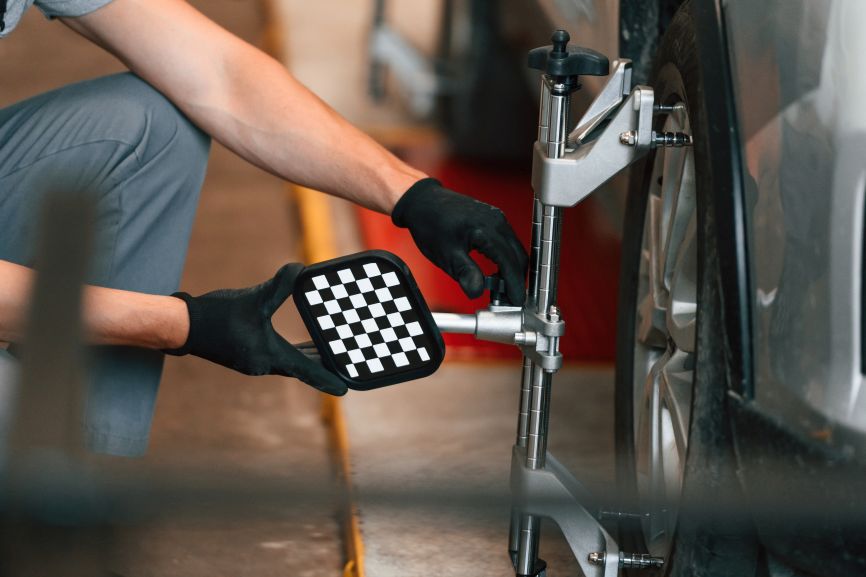
Auto King provides both two-wheel and four-wheel laser wheel alignment at its Bethnal Green garage.
How Much Does Wheel Alignment Cost in the UK?
The price depends on the vehicle, the equipment used, the number of wheels measured and the adjustments required.
Typical UK figures include:
- Basic front tracking or alignment: Often around £40 to £70
- Four-wheel alignment: Commonly around £70 to £100
- Specialist or performance vehicles: Potentially £100 or more
Current published estimates vary. Checkatrade lists approximately £70 as a typical four-wheel alignment cost, whilst RAC data puts combined front and rear alignment at around £90.
Ask the garage whether the price includes measurement only or the required adjustments as well. Complex work may cost more if seized adjusters, worn components or specialist procedures are involved.
What Does Skipping Wheel Alignment Cost?
An alignment inspection costs considerably less than replacing tyres early.
Incorrect geometry may cause:
- Premature inner or outer shoulder wear
- Reduced tyre lifespan
- Persistent steering correction
- Poor straight-line stability
- Additional strain on worn steering or suspension parts
- Repeat diagnostic visits if the underlying problem is ignored
A £40 to £100 alignment service may prevent avoidable tyre replacement, but no garage can promise a fixed number of extra miles. The financial benefit depends on how far the alignment is outside specification and how quickly the issue is corrected.
Frequently Asked Questions
How often do I really need wheel alignment?
Consider having it checked once a year as a preventive baseline. Cars driven infrequently on good roads may go longer, whilst high-mileage vehicles and cars regularly exposed to potholes may need checks more often. Always book sooner if symptoms appear.
Do I need two-wheel or four-wheel alignment?
It depends on the vehicle’s suspension design and manufacturer specifications. Four-wheel measurement is useful on many modern cars, but not every angle on every vehicle can be adjusted.
How much does four-wheel alignment cost in the UK?
Four-wheel alignment commonly costs approximately £70 to £100. Prices can be higher for specialist vehicles, London labour rates, seized adjustment points or more complicated suspension systems.
What are the signs of poor wheel alignment?
Common signs include persistent pulling, an off-centre steering wheel and uneven inner or outer tyre wear. Vibration may have another cause, such as wheel imbalance or tyre damage.
Should alignment be checked after every pothole?
Not every minor impact requires an alignment. Arrange a check after a severe impact or when you notice pressure loss, tyre damage, pulling, unusual noises, an off-centre steering wheel or changed handling.
Is wheel alignment included in a normal car service?
Usually not. A standard service may identify uneven tyre wear or suspension problems, but wheel alignment measurement and adjustment are generally separate services.
Book a Wheel Alignment Check in Bethnal Green
For most UK drivers, an annual wheel alignment check is a sensible baseline rather than a compulsory interval. Book earlier after a significant pothole impact, kerb strike, tyre replacement, steering repair or suspension work. You should also arrange an inspection whenever the vehicle starts pulling, the steering wheel sits off centre or the tyres develop uneven wear.
If you notice pulling, uneven tyre wear or an off-centre steering wheel, you can book a wheel alignment with Auto King before the problem leads to premature tyre replacement.
Auto King provides professional wheel alignment in Bethnal Green for drivers across East London. The service includes two-wheel and four-wheel laser alignment, tyre pressure and wear checks, steering and suspension inspection, camber, caster and toe assessment, and post-alignment road testing.
With 616 five-star reviews, Auto King has built a strong local reputation for mechanical repairs, diagnostics, tyre services and practical advice. Contact the garage to book an annual check or arrange an inspection after any of the alignment trigger events covered above.
Book an appointment online or Call us at 020 3877 6667