
If you drive in London and have noticed white marks, bubbling lacquer or a wheel that keeps losing pressure, alloy wheel corrosion may be the cause. What starts as a cosmetic problem can spread once moisture and road salt reach exposed aluminium, and corrosion around the tyre bead can sometimes contribute to air loss. Auto King in Bethnal Green can inspect corroded wheels, identify what is happening beneath the finish and advise on the appropriate repair.
Quick Answer: Alloy wheel corrosion happens when the protective finish is damaged or fails and the aluminium beneath is exposed to moisture and contaminants. Instead of the orange-brown rust associated with steel, aluminium corrosion often appears as white or grey deposits, cloudy patches, bubbling lacquer or pitting. Road salt can accelerate the process. Proper repair normally involves removing the failed finish and corrosion, preparing the metal and applying a new protective finish.
What Does Alloy Wheel Corrosion Look Like?
Alloy wheel corrosion often looks different from rust on steel bodywork. Aluminium naturally forms an oxide layer, and corrosion products on aluminium are usually pale rather than orange-brown.
Common signs include:
- white or grey powdery deposits
- cloudy or milky patches beneath lacquer
- bubbling, lifting or peeling clear coat
- thin white or worm-like marks beneath a coating
- pitting in the wheel surface
- corrosion around the rim edge or kerb-damaged sections
Those worm-like marks can be associated with filiform corrosion, a form of under-film corrosion that can start at coating defects and spread beneath the finish. Research on coated aluminium alloys shows that coating defects and chloride contamination can play an important role in this process.
Diamond-cut wheels can make corrosion especially visible because their machined face is protected by clear lacquer. Once that lacquer is damaged or loses adhesion, moisture can get underneath it. If you are unsure which finish you have, our guide to diamond cut wheels explains the difference.
What Causes Alloy Wheel Corrosion?
Corrosion usually begins when the wheel’s protective coating is breached or starts to fail. Paint, powder coating and lacquer act as a barrier. Scratches, stone chips, kerb rash and ageing lacquer can create points where moisture and contaminants reach the metal.
Road Salt
Road salt is a major winter accelerator. National Highways operates its winter service from 1 October to early April and uses dry and pre-wetted salt across much of the strategic road network. Salting is weather dependent, so there is no single UK-wide period in which every road is treated.
Chlorides are particularly relevant to coated aluminium because they can contribute to corrosion where the coating is damaged. Repeated salty road spray on an already chipped or exposed area is therefore a poor combination for an alloy wheel.
Kerb Damage and Stone Chips
A light kerb scrape may seem cosmetic, but if it cuts through the protective coating it can expose bare aluminium. Corrosion can then begin around the damaged edge and spread beneath surrounding lacquer.
This is why a wheel that looked like it only had a small kerb mark in summer can develop bubbling or cloudy patches after months of wet-road exposure.
Brake Dust, Dirt and Cleaning Chemicals
Wheels collect brake dust and road grime quickly. Regular cleaning makes it easier to spot coating damage, but stronger is not always better. Use a cleaner suitable for the specific wheel finish and follow the product or wheel manufacturer’s instructions.
The principle is similar to clear coat failure on body paint: once a coating has lost adhesion, simply covering the visible defect does not fix the problem underneath.
Can Corroded Wheels Cause a Slow Puncture?
Yes. Corrosion around the bead seat can contribute to a slow air leak.
The bead seat is the area where the tyre forms its airtight seal against the wheel. If corrosion makes that surface rough, dirty or uneven, the tyre may not seal correctly.
Tyre-industry guidance recommends checking alloy rims for corrosion and thoroughly cleaning the bead-seat area to help ensure proper air retention. Michelin also advises inspecting the wheel for corrosion or damage around the bead seat and flange because defects there can lead to air leaks.
Signs worth investigating include:
- one tyre repeatedly losing pressure
- no obvious nail or screw in the tread
- a leak detected around the tyre-to-rim joint
- visible corrosion around the wheel edge
- pressure dropping again soon after reinflation
Do not automatically assume corrosion is the cause. Punctures, faulty valves, damaged tyres and wheel cracks can produce similar symptoms, so a proper leak test is the sensible next step.
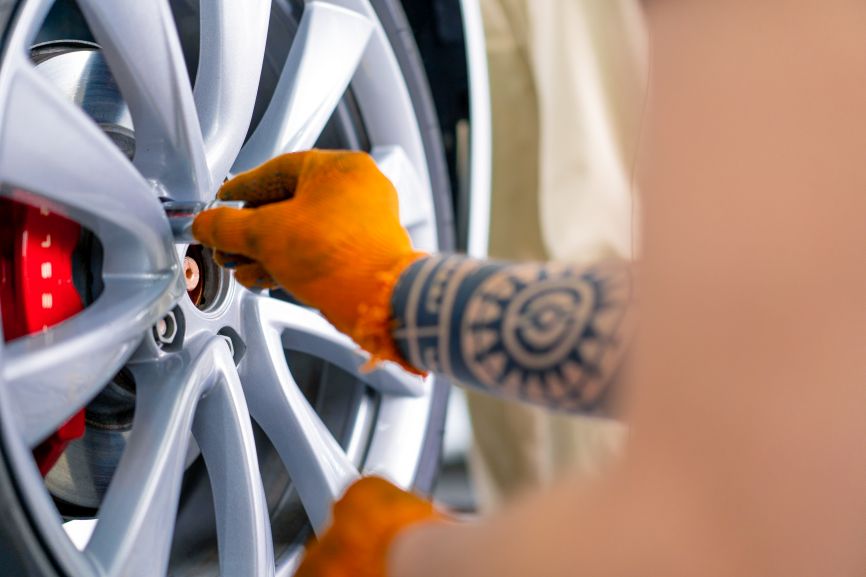
How Is Alloy Wheel Corrosion Repaired?
A lasting alloy wheel corrosion repair depends on removing failed material before refinishing. Painting over active corrosion or loose lacquer can leave the underlying problem in place.
1. Inspect the Wheel
The wheel is first checked for the extent of corrosion and for other problems such as cracks, distortion, deep pitting or previous repairs.
The appropriate process also depends on whether the wheel is painted, powder-coated or diamond cut.
2. Remove the Failed Finish
Loose lacquer, paint and contamination are stripped from the affected surface.
If corrosion has travelled beneath the coating, preparation may need to extend beyond the area that first looked damaged. Research into coated aluminium supports the importance of coating defects and proper surface preparation in controlling under-film corrosion.
3. Remove Corrosion and Prepare the Metal
Corrosion is removed back to a stable surface and the wheel is prepared for refinishing. Kerb damage or pitting may also need attention.
If the problem is around the bead seat, that sealing surface needs particular care because its condition can affect how well the tyre seals against the rim.
4. Refinish and Seal the Wheel
The prepared wheel then receives the appropriate coating system and protective finish.
Diamond-cut wheels use a different repair process from conventional painted wheels, so whether the original finish can be restored depends on the wheel’s condition and previous repair history.
For budgeting, see what refurbishment costs. If professional repair is appropriate, Auto King’s alloy wheel refurbishment service specifically covers corrosion, oxidation, peeling lacquer and kerb-related wheel damage.
Preventing Winter Wheel Corrosion
You do not need to stop using alloy wheels in winter, but damaged finishes deserve more attention when roads are wet and salted.
To reduce the risk:
- Wash road salt and grime off regularly. Pay attention to the rim edge and accessible inner surfaces, not just the visible wheel face.
- Deal with fresh kerb damage. Leaving bare aluminium exposed gives moisture and contaminants an easier route into the finish.
- Use suitable cleaning products. Choose products designed for your particular wheel finish.
- Avoid relying on aggressive cleaners. Regular gentle cleaning is preferable to letting contamination build up for months.
- Watch for early changes. Cloudy lacquer, bubbling and white marks can indicate deterioration beneath the finish.
- Check your tyre pressures. Investigate repeated pressure loss from one wheel rather than continually topping it up.
Winter is often when existing damage becomes more obvious. Salt does not mean an intact wheel will suddenly corrode overnight. The bigger concern is repeated exposure where the protective finish is already compromised.
Frequently Asked Questions
Is Alloy Wheel Corrosion Dangerous?
Light surface corrosion is often cosmetic, but deep pitting, cracking, distortion, repeated tyre-pressure loss or deterioration around the bead seat deserves professional inspection.
There is no universal age at which an alloy wheel becomes unsafe. Its condition and structural integrity matter more than age alone.
Can Corroded Alloys Fail an MOT?
Cosmetic alloy wheel corrosion is not listed as a separate automatic failure item for cars in the current DVSA MOT inspection manual.
The manual does, however, require rejection for defects such as a fractured wheel or a badly distorted wheel. A tyre that is incorrectly seated on the wheel rim is a major defect, while an obviously under-inflated tyre is classed as a minor defect.
So a few cosmetic white marks do not automatically mean MOT failure. However, if deterioration is associated with more serious wheel or tyre defects, it can become relevant to roadworthiness.
If a wheel is heavily deteriorated, have it inspected rather than waiting for the MOT.
Can Corrosion Be Repaired Without Refurbishing the Whole Wheel?
Sometimes a small, localised defect can be treated, but it depends on the wheel finish and how far corrosion has spread beneath it.
The key is proper preparation. Bubbling beneath lacquer can extend beyond the most obvious mark, so simply painting over active corrosion is unlikely to provide a durable repair.
Why Are My Wheels Corroding but the Car Body Is Fine?
Wheels operate in a particularly exposed environment. They sit close to wet roads, grit, brake dust and road salt, and they are easy to chip or scrape against kerbs.
Your car body uses different coating systems, and many panels are less exposed to this combination of road contamination and impact damage.
If you are seeing orange-brown corrosion on steel body panels too, our guide to bodywork rust repair explains the separate causes and repair considerations.
Does Road Salt Damage Alloy Wheels?
Yes, road salt can accelerate corrosion when chloride-containing moisture reaches exposed aluminium or gets underneath a damaged coating. Research on coated aluminium shows that chloride exposure is an important factor in corrosion developing from coating defects.
An intact finish provides an important protective barrier, while chips, kerb rash and failed lacquer create vulnerable areas.
Regular washing and early attention to coating damage are more useful than waiting until bubbling has spread across the wheel.
Get Alloy Wheel Corrosion Checked in Bethnal Green
White oxidation, bubbling lacquer and recurring air loss are worth checking before the damage becomes more extensive. The correct solution depends on whether the problem is confined to the finish, has reached the bead seat or is accompanied by other wheel damage.
Auto King in Bethnal Green inspects alloy wheels for corrosion and other damage before recommending the appropriate repair. If corrosion repair or refinishing is suitable, the aim is to remove the failed material and restore protection rather than simply hide the visible marks.
Book an appointment online or Call us at 020 3877 6667