
If you drive an older car in London, have spotted bubbling paint around a wheel arch or sill, or have been given an MOT corrosion advisory, this guide is for you. Rust can be difficult to judge because a small mark may hide more corrosion underneath, while some visible rust is only cosmetic. Auto King in Bethnal Green can assess how far the corrosion has progressed and explain whether the area needs local treatment, refinishing, welding or a more involved body repair.
Quick Answer: Car rust repair in the UK may cost around £150–£300 for a small surface-rust patch, £300–£600 for a localised panel or arch repair, and £400–£1,000+ where corroded metal needs cutting out and welding. Multiple badly affected areas can reach £1,000–£3,000+. Rust becomes structural when it weakens load-bearing or safety-critical parts of the vehicle, not simply when an orange-brown patch appears.
Surface Rust, Scale and Structural Rot
“Surface rust”, “scale” and “structural rot” are useful ways to describe worsening corrosion, although they are not official DVSA categories. What matters is how much metal has been lost, whether the remaining metal is sound and where the corrosion is located.
Surface rust: early corrosion with little metal loss
Surface rust is the earliest stage. It can develop when moisture reaches exposed steel after paint, primer or another protective coating has been damaged.
You may notice a small orange-brown patch around a stone chip, scratch, panel edge or wheel arch. At this stage, the corrosion is often mainly cosmetic if the metal underneath remains firm and has not been significantly thinned.
Repair normally involves removing the corrosion, preparing the bare metal and rebuilding the protective coating. Simply painting over active rust can leave the problem underneath the new finish.
Scale: corrosion has started eating into the metal
As corrosion progresses, the metal may become rough, pitted or flaky, and paint can bubble as corrosion develops underneath it.
The repairer may need to remove a wider area to reach sound metal. Filler may sometimes be used as part of finishing a cosmetic panel after correct preparation, but filler does not restore strength to badly thinned structural steel.
Structural rot: corrosion has weakened an important part of the car
Rust does not become structural merely because it has made a hole in any body panel. Location and strength matter.
It becomes a structural concern when corrosion weakens load-bearing metal or supporting areas around safety-related components such as suspension, steering, braking or seat-belt mountings. Sills, floors, chassis sections and subframes can also be structurally important depending on the vehicle.
At that stage, cosmetic treatment is not enough. The damaged section may need to be cut back to sound metal and repaired correctly, or the affected panel or component may need replacement.
The DVSA specifically notes that the safety significance of corrosion depends on both its extent and the function of the affected section. Even relatively localised corrosion can matter where it compromises an important load-bearing area.
Where Rust Usually Starts on UK Cars
Rust often develops where water, dirt and road salt can collect or where protective paint or coatings have been broken.
Common areas include:
- sills and jacking points
- wheel arches and arch lips
- door bottoms and seams
- boot floors and spare-wheel wells
- floor pans and underbody seams
- subframes and areas around suspension mountings
- scratches and stone chips that expose steel
Stone chips deserve attention because a chip that reaches bare steel gives moisture a direct route to the metal. Dealing with stone chip repair early can reduce the chance of corrosion spreading beneath the paint.
Clear coat failure is different. Failed lacquer alone does not mean the steel is rusting because other paint layers may still be intact. However, separate damage that reaches bare steel can create the conditions for corrosion.
How Much Does Rust Repair Cost in the UK?
There is no fixed car rust repair price because two patches that look similar from the outside can require very different work once loose paint and corrosion are removed.
These are indicative UK ranges only, not Auto King quotations:
| Repair | Indicative UK cost |
| Small surface-rust patch, treatment and refinish | £150–£300 |
| Localised rust repair on one panel or arch | £300–£600 |
| Repair requiring cutting and welded metal | £400–£1,000+ |
| Multiple badly corroded areas | £1,000–£3,000+ |
| Structural corrosion found at MOT | Assessment required, varies widely |
Current UK pricing guides show why the range is so wide. A small rust patch can be around £200, while extensive multi-panel work can exceed £3,000. Chassis or subframe repairs can also reach four figures depending on access, parts and the extent of corrosion.
What affects car rust repair cost?
The main factors are:
- How far the corrosion has spread. Rust can continue beneath paint or inside seams.
- Whether the metal is pitted, thinned or perforated. Deeper corrosion usually requires more work.
- Whether cutting and welding are required. Removing rotten steel and fitting sound metal adds labour.
- How easy the area is to access. Inner arches, sills and underbody sections can be more involved than an outer panel.
- Whether repair or replacement is the safer option. Some badly corroded components are better replaced.
- How much refinishing is required. Primer, paint, clear coat and blending all affect the final cost.
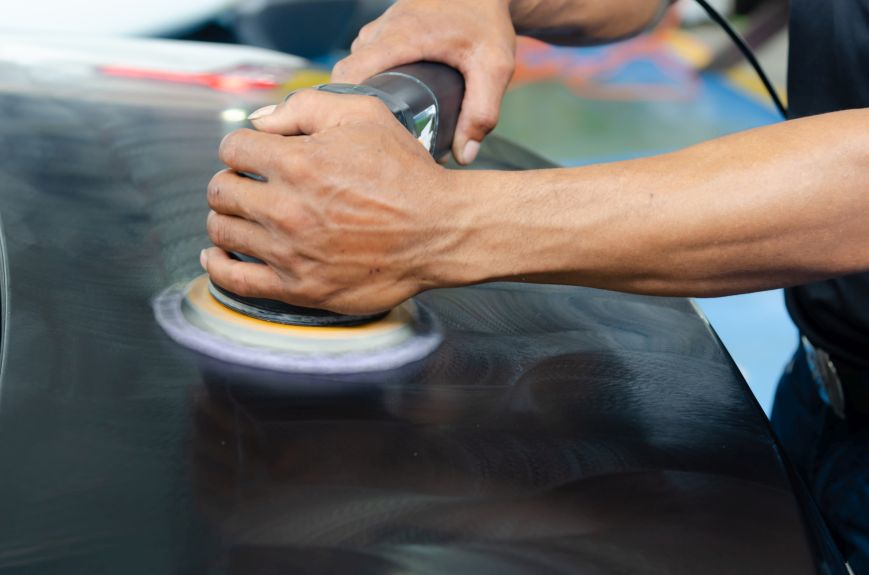
After the metalwork is complete, accurate colour matching helps the repair sit naturally beside the surrounding paint.
Will Rust Fail an MOT?
Light cosmetic rust on a non-structural outer panel is not automatically an MOT failure. The important question is whether corrosion affects the strength, continuity or safety of the vehicle’s structure or another testable component.
The DVSA MOT inspection manual defines certain “prescribed areas”. These include load-bearing or supporting structure within 30cm of the mounting location of specified testable items, including relevant braking, steering, suspension and seat-belt components.
This is why the familiar “30cm rule” is often oversimplified. Rust does not automatically fail an MOT simply because it is within 30cm of a mounting point.
In a prescribed area, the DVSA says corrosion should be rejected if:
- the corrosion has caused a hole in the metal
- the area does not feel firm when assessed
- light assessment with the permitted corrosion tool creates a hole
The relevant MOT sections also treat significantly reduced strength or continuity in these areas as a major defect, with more severe weakening potentially classed as dangerous.
Away from prescribed areas, corrosion can still fail where the overall vehicle structure is significantly weakened or where deterioration adversely affects safety.
So a rusty outer wing and heavy corrosion around a suspension mounting are not the same problem.
If your MOT history mentions corrosion, or you can see flaky or soft metal around a sill, floor or mounting area, get it assessed rather than assuming it only needs paint.
For the official criteria, see the DVSA MOT guidance on structural integrity and corrosion.
Why UK Winters Make Rust Worse
Road salt is used to help prevent ice by lowering the freezing point of moisture on the road. Chloride-containing salt contamination can also accelerate corrosion of exposed metal.
The vulnerable areas are often hidden from view. Wet dirt and salty residue can collect around wheel arches, sill seams, underbody sections and subframe areas.
Rust is not only a winter problem. Moisture, damaged coatings and trapped debris matter throughout the year. Winter road treatment simply adds another corrosion-promoting factor, which is why washing salt and grime from arches and the underside can help reduce build-up.
Alloy wheels corrode too, although aluminium corrosion is different from orange-brown rust on steel. Our guide to wheel corrosion covers that process separately.
FAQs
Can rust be repaired or does the panel need replacing?
Often, yes. Small surface areas may only need the corrosion removed and the paint system rebuilt.
If the metal is heavily pitted, perforated or too weak, the damaged section may need to be cut out and replaced with sound metal. A complete panel or component may be more appropriate when corrosion is extensive.
Is it worth repairing rust on an older car?
It depends on the extent of the damage, the car’s overall condition and value, and what is required to make the repair safe and durable.
A localised repair on an otherwise reliable car may make financial sense. Several structural repairs can become expensive, so compare the estimate with the vehicle’s overall condition rather than its age alone.
If corrosion affects safety or roadworthiness, that is different from deciding whether to fix a cosmetic blemish.
Will rust come back after repair?
It can. Rust is more likely to return if active corrosion was left behind, the repair did not extend to sound metal, moisture remains trapped in a seam, or the protective coating fails again.
A durable repair depends on dealing with the corrosion properly and sealing and refinishing the area correctly.
Can I treat surface rust myself?
A small, genuinely non-structural patch may be suitable for DIY treatment if the metal remains sound.
Rust removers or converters can form part of a surface-rust repair when used according to their instructions, followed by suitable preparation, primer and paint. They cannot restore metal that has already lost significant thickness or strength.
Structural welding should be left to an appropriately skilled repairer. DVSA guidance requires structural repairs to be properly carried out and appear as strong as the original structure. It also sets specific requirements for acceptable welding and repair methods in load-bearing areas.
Does rust spread if left alone?
Yes. Corrosion can continue while exposed steel has access to moisture and oxygen, and salt contamination can accelerate the process.
Rust may also continue beneath paint or along seams, so the visible patch does not always show the full affected area.
Get Car Rust Assessed in Bethnal Green
Rust is a problem where acting early can make a real difference. A small surface patch may need local treatment and refinishing, while deeper corrosion in the same area can eventually require cutting, welding or component replacement.
If you have bubbling paint, rust around a wheel arch or sill, or an MOT advisory mentioning corrosion, Auto King in Bethnal Green can inspect the affected area and explain the appropriate repair options. Learn more about Auto King’s bodywork repairs in Bethnal Green.
The aim is to establish how far the corrosion has progressed and repair it properly rather than simply hiding the visible mark.
Book an appointment online or Call us at 020 3877 6667