
For London drivers who have just noticed a scrape from a tight parking space, supermarket trolley, roadside branch or Bethnal Green kerb, the immediate concerns are usually cost, rust and whether the damage can be fixed at home. Auto King helps East London motorists identify how deep a scratch is and choose a safe, proportionate repair rather than risking further paint damage with the wrong DIY product.
Quick Answer: Light scratches confined to the clear coat can often be improved at home with a scratch remover or polishing compound costing around £10 to £25. Scratches that expose the coloured paint, primer or bare metal usually need colour-matched touch-up work or professional repair, commonly costing from about £100 depending on the damage.
How Do I Know How Deep My Car Scratch Is?
Before buying a touch-up paint pen or reaching for a polishing compound, work out which layer of the paint has been damaged.
Most modern car paint finishes are made up of several layers:
- Clear coat: The transparent outer layer that protects the finish and provides gloss.
- Base coat: The layer that gives the car its colour.
- Primer: The protective and bonding layer beneath the colour.
- Body panel: Usually steel, aluminium or plastic, depending on the part of the vehicle.
A scratch confined to the clear coat may be reduced through careful polishing because the colour layer remains intact. Once the scratch reaches the base coat, primer or underlying panel, polishing cannot replace the missing material.
Try the fingernail test
Wash and dry the damaged area first. Then move a clean fingernail gently across the scratch rather than running it along the groove.
- If your nail glides across without catching, the scratch is probably limited to the clear coat.
- If your nail catches slightly, the scratch may have reached the coloured base coat.
- If it catches firmly, or you can see grey primer, bare metal or black plastic, the damage is deeper.
The fingernail test is a useful first check, not a perfect diagnosis. One section of the scratch may be shallow while another has penetrated several paint layers.
Current UK motoring guidance generally treats scratches that cannot be felt with a fingernail as potentially polishable, while deeper grooves are more likely to need touch-up paint or professional repair.
Use the water test
Clean the area and pour clean water over the mark.
If the scratch becomes much less visible while wet but returns when the panel dries, it is likely affecting the clear coat. The water temporarily fills the fine groove and changes how light reflects from the surface.
If the line remains obvious when wet, especially if it appears grey, white, black or metallic, it has probably gone through the clear coat.
The water test cannot confirm the exact depth, but it can help distinguish a fine surface mark from missing paint.
Car scratch severity guide
| Scratch level | What you may notice | Most suitable repair |
| Clear coat only | Fine white mark or swirl; fingernail does not catch | Scratch remover, polishing compound or machine polishing |
| Into the base colour | Colour is missing; nail catches slightly | Colour-matched touch-up or professional localised repair |
| Into primer or bare metal | Grey primer, exposed metal, black plastic or a deep groove | Professional preparation, priming and repainting |
A scratch on a painted plastic bumper may expose black or grey plastic rather than metal. Plastic will not rust, but a deep bumper scratch still requires proper preparation and colour matching if you want a smooth, durable finish.
Can I Fix a Light Scratch Myself?
You can often improve a light clear-coat scratch at home, provided the surface is clean and you use a product designed for automotive paint.
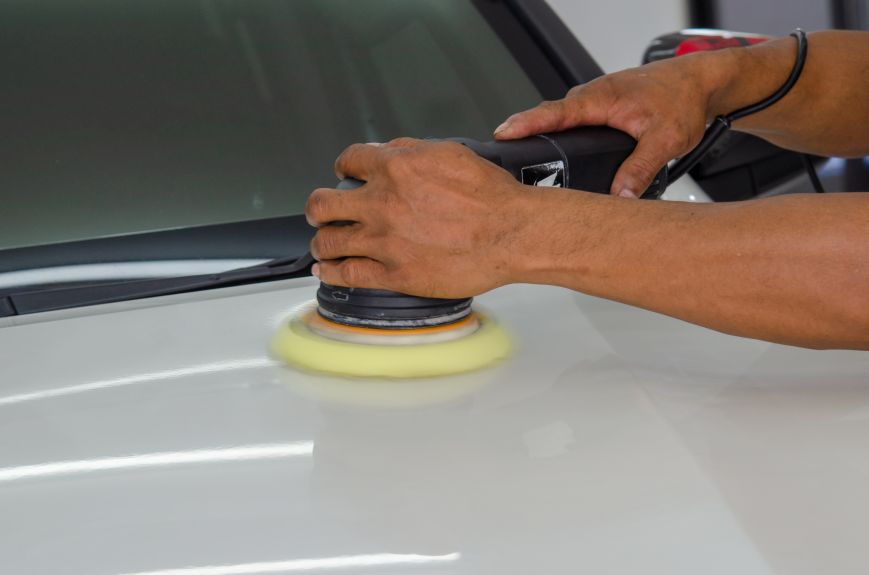
Scratch removers and fine polishing compounds use mild abrasives to level the area around a shallow mark. They do not add new paint. Instead, they smooth the edges of the scratch so it reflects less light and becomes harder to see.
Independent UK testing has found that scratch-removal products can work well on shallow scratches, while deep scratches are better assessed professionally.
What you will need
For a basic clear-coat repair, gather:
- Car shampoo
- Clean water
- Two or more clean microfibre cloths
- Automotive scratch remover or fine polishing compound
- Foam applicator pad, if recommended
- Masking tape
- Car wax or paint sealant
- Nitrile gloves
A basic DIY clear-coat repair will normally cost around £10 to £25, depending on the products you already own.
Do not begin with sandpaper, a rotary polisher or a heavy cutting compound unless you have experience using them. Aggressive products can remove too much clear coat, particularly around panel edges, ridges and styling lines.
How Do You Remove a Light Scratch from Car Paint?
1. Wash and dry the area
Remove dust, road grit, grease and loose dirt before touching the paint.
Rubbing a compound over a dirty panel can drag particles across the surface and create more scratches. Use car shampoo, rinse thoroughly and dry the area with a clean microfibre cloth.
Avoid washing-up liquid because it can strip protective waxes and is not formulated for regular automotive paint care.
2. Inspect the scratch in good light
Look at the mark from several angles.
Sometimes what appears to be a scratch is transferred paint or rubber from another object sitting on top of the clear coat. This type of mark may be easier to remove than a genuine groove in the paint.
Run your fingernail across the area again. If it catches noticeably, stop and consider professional advice before polishing.
3. Read the product instructions
Different scratch removers have different application methods. Some are designed for hand use, while others are intended for machine polishing.
Test the product on a small, inconspicuous section first, especially if:
- The vehicle is older
- The paint is faded
- The panel has previously been repaired
- The finish is matte or satin
- You do not know how much clear coat remains
Matte and satin finishes should not be polished using conventional compounds because polishing can create a permanently glossy patch.
4. Apply a small amount
Use only the amount recommended by the manufacturer. Work on a small section using light, controlled pressure.
Several gentle applications are safer than one aggressive attempt.
Some manufacturers recommend overlapping straight movements, while others specify circular movements. Follow the instructions supplied with the product rather than assuming one technique suits every compound.
5. Remove the residue and inspect
Wipe away the residue with a clean microfibre cloth before it dries fully.
Inspect the panel under good lighting. Repeat only if the manufacturer permits it. Stop if:
- The paint becomes unusually dull
- The cloth picks up the car’s paint colour
- The area becomes hot
- The scratch is not improving
- You are unsure how much material has been removed
6. Protect the repaired area
Once you are satisfied with the result, apply wax or paint sealant where appropriate.
Polishing may remove some of the existing protective layer, so resealing the area helps protect the finish from water, contamination and UV exposure.
Should I Use a Touch-Up Paint Pen?
A touch-up paint pen adds replacement colour to a chip or scratch where paint is missing. It is not designed to remove a clear-coat scratch.
A pen may be suitable for:
- A small stone chip
- A short, narrow scratch
- A tiny area of exposed primer
- Temporary protection over a small damaged spot
- A repair where a perfect cosmetic finish is not essential
You must use the correct manufacturer paint code. The code may be listed on a label in the door shut, engine bay or boot area, although its location varies between manufacturers.
Touch-up paint is less likely to produce a seamless result on:
- Long scratches
- Metallic paint
- Pearlescent paint
- Matte finishes
- Large scuffs
- Curved panel edges
- Faded or previously repaired paint
- Scratches crossing more than one panel
Apply paint in thin layers and follow the drying times provided by the manufacturer. Adding one thick line of paint can create a raised ridge that is more noticeable than the original scratch.
For damage caused by small road impacts rather than a long scrape, read our guide to stone chip repair.
Does Toothpaste Really Remove Car Scratches?
Toothpaste contains mild abrasives, which is why it may temporarily reduce the appearance of an extremely shallow clear-coat mark.
However, toothpaste is not formulated for automotive finishes. Different products have different abrasive ingredients, and they provide no lasting paint protection.
A proper automotive polish or scratch remover is a safer and more predictable choice. Toothpaste cannot replace missing colour, primer or clear coat, so it will not repair a deep scratch.
The same caution applies to household hacks involving WD-40, nail varnish or general-purpose cleaners. Some may temporarily disguise a mark, but they do not rebuild damaged paint layers.
When Does a Scratch Need Professional Repair?
Professional repair is usually recommended when the scratch has gone through the clear coat or when a good colour match matters.
Arrange an assessment if:
- Your fingernail catches firmly
- The original colour is missing
- Grey or white primer is visible
- Bare metal or plastic is exposed
- Rust or bubbling has appeared
- The scratch covers a large area
- The damage crosses two panels
- The panel is dented as well as scratched
- The car has metallic, pearlescent or matte paint
- The vehicle is leased or being prepared for sale
- An earlier DIY repair has left paint runs or mismatched colour
A deep scratch may require cleaning, degreasing, sanding, corrosion treatment, priming, colour matching, paint blending and clear-coat application.
Spray repairs also require controlled preparation and accurate masking. The AA advises that spray painting is difficult to complete properly without suitable preparation and that an accurate colour match is important.
Why should exposed metal be repaired promptly?
The paint system protects metal panels from moisture and oxygen. Once bare steel is exposed, corrosion can begin if water and contaminants remain on the surface.
Wet UK weather, road spray and winter salt can increase the risk. Rust will not necessarily become severe overnight, but leaving exposed metal untreated gives corrosion an opportunity to begin and spread underneath the surrounding paint.
Keep the area clean and dry until it can be repaired. Do not apply touch-up paint directly over:
- Dirt
- Wax
- Grease
- Moisture
- Loose paint
- Existing rust
Rust must be removed or treated before the area is sealed.
Can a poor DIY repair make the damage worse?
Yes. Common DIY mistakes include:
- Polishing through the remaining clear coat
- Using the wrong paint code
- Applying paint too thickly
- Sanding beyond the damaged area
- Painting over rust
- Trapping dirt or moisture beneath the repair
- Using household paint or nail varnish
- Spraying without adequate masking
- Working in direct sunlight or unsuitable temperatures
A failed DIY repair may have to be removed before the original damage can be corrected, increasing the amount of preparation required.
A £15 paint pen can be useful for the right chip. It is not a substitute for proper bodywork preparation on a deep or extensive scratch.
How Much Does Car Scratch Repair Cost in the UK?
The car scratch repair cost in the UK depends on:
- Scratch depth
- Scratch length
- Number of affected panels
- Paint type
- Panel material
- Presence of rust or dents
- Whether localised repair is possible
- Whether the entire panel needs repainting
The following prices are general UK estimates, not fixed Auto King quotations:
| Scratch severity or repair | Typical UK cost | Approximate turnaround |
| Clear-coat scratch, DIY products | £10–£25+ | Same day |
| Primer-level DIY repair kit | £20–£50+ | One day or longer, including curing |
| Metal-exposed DIY repair products | £30–£80+ | Several days, including curing |
| Professional minor scratch repair | £100–£250+ | Same day to 2 days |
| Deep scratch on one panel | £250–£500+ | 1–3 days |
| Multiple-panel repainting | £500–£1,500+ | Several days |
These ranges reflect current RAC guidance. Actual quotations vary significantly by vehicle, location, paint finish and repair method.
A technician cannot price every scratch accurately from its length alone. A five-centimetre scratch through metallic paint may require more labour than a longer surface scuff that can be polished away.
Ask whether the quotation includes:
- Preparation
- Rust treatment
- Primer
- Colour matching
- Paint blending
- Clear coat
- Polishing
- VAT
- Any repair guarantee
Damage concentrated on a painted bumper may require a different technique from a scratch on a steel door or aluminium bonnet. Read our bumper scuff repair guide for advice specific to bumper damage.
Pricing note for publication: Confirm Auto King’s current labour rates and minimum repair charge before publishing this table.
Is Professional Scratch Repair Worth It?
Professional repair is usually worth considering when the damage is too deep to polish or when appearance, durability and corrosion protection are important.
It may offer better value when:
- You would need to buy several specialist products
- You have no paint-repair experience
- The scratch is highly visible
- Accurate colour blending matters
- The car is valuable
- The car is leased
- You plan to sell or part-exchange it
- There is exposed metal or early rust
- Previous DIY attempts have failed
Professionally repaired chips, scratches and dents may be accepted under lease fair wear and tear standards when the work is completed to an appropriate standard. Poor repairs, visible primer, bare metal or corrosion are more likely to cause problems at the end of the agreement.
How Do Professionals Fix Car Scratches?
The exact process depends on the depth, location and size of the damage. A professional repair may involve:
- Washing and degreasing the panel
- Assessing the damaged paint layers
- Removing loose paint or corrosion
- Sanding and feathering the repair edges
- Applying filler if the panel is gouged or dented
- Applying primer
- Matching the manufacturer’s paint colour
- Spraying and blending the base coat
- Applying clear coat
- Curing, polishing and inspecting the repair
A shallow clear-coat mark may only require machine polishing. A deep scratch reaching primer or metal may require a larger section of the panel to be refinished so the new paint blends naturally into the original finish.
Does Car Insurance Cover Scratch Repair?
Car insurance may cover scratch damage, but it depends on the policy and how the damage occurred.
A comprehensive policy may cover scratches caused by:
- A collision
- Accidental damage
- Vandalism
- An insured third party
- Another covered incident
Third-party-only insurance does not normally cover repairs to your own vehicle. Third party, fire and theft cover may cover theft-related damage but generally does not provide the same accidental-damage protection as a comprehensive policy.
For deliberate scratching or keying, comprehensive insurance may cover malicious damage, subject to the policy terms and excess.
Is making an insurance claim worthwhile?
Compare the repair quotation with:
- Your compulsory excess
- Your voluntary excess
- Your no-claims discount protection
- The possible effect on future premiums
- Any separate scratch-and-dent cover
- Whether another driver is liable
For example, a claim for a £200 repair may provide little financial benefit if your combined excess is £350.
The RAC notes that the excess on many policies can be higher than the cost of paying for minor scratch repairs directly.
Even when you do not intend to claim, your policy may require you to report an accident or incident. Check the wording of your policy or speak to your insurer rather than assuming notification is unnecessary.
Read what your car insurance actually covers for more information about the difference between insured damage and routine repair costs.
Frequently Asked Questions
Can I fix paint scratches on my car myself?
You can often improve a shallow scratch yourself when it is confined to the clear coat and your fingernail does not catch. Use an automotive scratch remover or fine polishing compound. If colour, primer, metal or plastic is exposed, professional assessment is safer.
Does DIY scratch repair work?
DIY repair works best on clear-coat scratches, light swirl marks and paint transferred from another object. It is less reliable on deep scratches because polishing cannot replace missing paint. Touch-up paint may protect a small damaged area, but the finished repair can remain visible.
Is professional scratch repair worth it?
Professional repair is usually worthwhile for deep, long or highly visible scratches, particularly on leased, valuable or recently purchased vehicles. It also provides better preparation and colour blending where primer or metal is exposed.
Will toothpaste really remove a scratch?
Toothpaste may make an extremely light clear-coat mark less visible because it contains mild abrasives. It will not repair missing colour, primer or clear coat. A dedicated automotive scratch-removal product is the safer option.
How long does professional scratch repair take?
A minor polishing or localised repair may be completed within a day. Deeper damage requiring priming, painting, clear coating and curing may take one to three days or longer. The technician should confirm the turnaround after inspecting the vehicle.
Can an automatic car wash cause scratches?
Yes. Dirt trapped in reused brushes or contact materials can create fine swirl marks in the clear coat. The RAC advises that stiff automatic car-wash brushes may leave fine scratches.
Will a scratch get worse if I leave it?
A shallow clear-coat scratch may remain mainly cosmetic. A scratch exposing primer or bare metal is more urgent because water and contaminants can reach the underlying surface and increase the risk of corrosion.
Can a car scratch cause an MOT failure?
An ordinary cosmetic bodywork scratch is unlikely to cause an MOT failure. However, serious body damage could become an issue if it creates a dangerous sharp edge or affects the vehicle’s structure, lights, registration plate, windscreen or another testable component.
Should I Repair the Scratch Myself or Book It In?
Use a DIY scratch-removal compound only when the mark is clean, shallow and limited to the clear coat. If your fingernail catches, the colour has been removed or primer, metal or plastic is exposed, stop polishing and arrange an assessment.
Drivers searching for car scratch repair near me in East London can visit Auto King in Bethnal Green, E2 0LQ. Our team can inspect the damaged paint and explain whether it needs polishing, a localised colour-matched repair or more extensive refinishing.
For a properly prepared and durable finish, book professional scratch and scuff repair with Auto King.
Book an appointment online or Call us at 020 3877 6667