
For UK drivers planning school runs, summer motorway trips, airport runs or weekend drives out of London, tyre pressure summer heat changes can be more than a small inconvenience. Hot weather can make tyre pressure readings rise, long journeys can heat tyres even further, and many drivers are unsure whether to add air, release air or leave the tyres alone. At Auto King in Bethnal Green, East London, we help local drivers understand these checks clearly so their cars stay safer, steadier and ready for the road.
Yes, hot weather does affect tyre pressure. As the temperature rises, the air inside your tyres expands, which raises the pressure reading. This is normal, but it matters because the pressure you see after a hot motorway drive may not reflect the true resting pressure of the tyre. The safest approach is simple: check your tyres cold, use the manufacturer’s recommended pressure, and never guess based on the weather alone.
Tyre Pressure Summer Heat Changes, Why They Happen
Your tyres are sealed containers filled with air. When that air warms up, it expands. When it cools down, it contracts. That is why tyre pressure can change between a cool early morning and a hot afternoon, even if you have not added or removed any air.
Many tyre safety guides use a rough rule of thumb that tyre pressure can change by around 1 to 2 PSI with a noticeable temperature change, often around 10°C, depending on tyre size, load and conditions. Halfords gives this as a general weather-related pressure guide, and it matches the advice often repeated across tyre safety guidance.
In real life, this can show up during a UK heatwave. A car parked overnight in Bethnal Green might show one pressure first thing in the morning, then a higher pressure after sitting in direct sun or driving across hot roads. That does not always mean something is wrong. It means the tyre is reacting to temperature.
Heat can come from two places:
- Ambient temperature, such as a hot summer day.
- Driving heat, caused by friction, speed, load and tyre flex.
That second point is where many drivers get caught out. Even on a mild day, a long motorway run can warm the tyres enough to raise the pressure reading.
Always Check Tyre Pressure When Tyres Are Cold
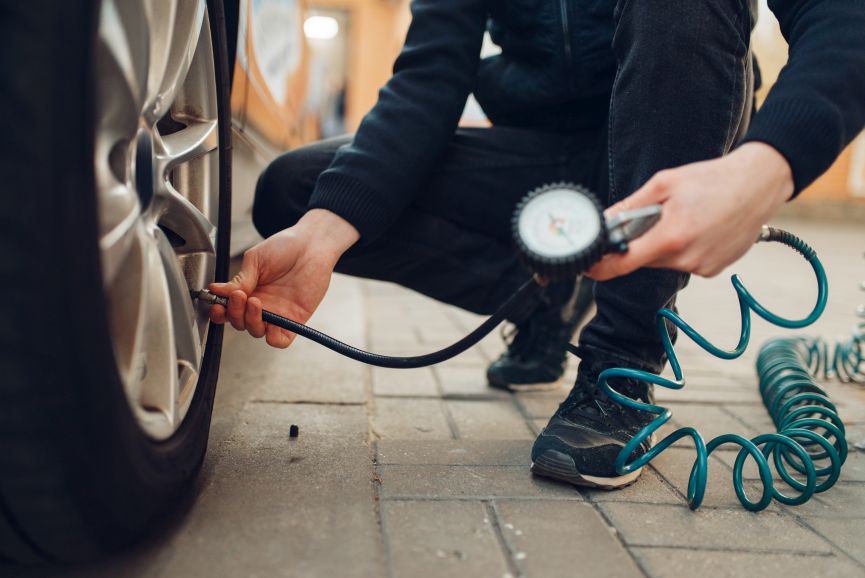
The best time to check tyre pressure is when the tyres are cold. In practical terms, that means before you have driven far that day, or after the vehicle has been parked for a few hours.
RAC guidance says tyre pressure should be checked monthly and when the tyres are cold because recently driven warm tyres can give inaccurate pressure readings.
A cold check gives you the most reliable reading because vehicle manufacturer tyre pressures are based on cold tyres. You can usually find the recommended PSI or bar figure in one of these places:
- Inside the driver’s door frame
- Inside the fuel filler flap
- In the owner’s handbook
- Sometimes on the passenger door frame
Here’s the thing. If you check your tyres straight after driving down the A12, A13, M11 or M25, the reading may be higher than expected. That does not mean you should immediately let air out. Once those tyres cool down, the pressure will drop again. If you released air while they were hot, they could become under-inflated later.
For most London drivers, the easiest habit is to check pressure before setting off, ideally early in the day. If you are unsure how to read the sticker or your car has different loaded and unloaded pressures, Auto King can check this for you at our Bethnal Green garage.
Does Hot Weather Mean You Should Under-Inflate Tyres?
No. Do not deliberately under-inflate your tyres in hot weather.
This is one of the most common summer tyre myths. Some drivers think, “If heat raises pressure, I’ll put in less air before a long drive.” It sounds logical, but it is not safe.
You should inflate tyres to the manufacturer’s recommended cold pressure. That recommendation already allows for normal pressure changes during driving. Under-inflated tyres flex more as they roll, which creates more heat inside the tyre. That extra heat can increase wear, affect handling and raise the risk of tyre damage on long journeys.
Under-inflation also affects how the tyre sits on the road. You may notice softer steering, reduced stability, poorer fuel economy or uneven shoulder wear. On busy East London roads, where potholes, speed humps and kerbside parking already put tyres under strain, low pressure can make existing weaknesses worse.
So the rule is simple:
- Check tyres cold.
- Inflate to the recommended cold pressure.
- Do not let air out of warm tyres just because the number looks high.
- Use the loaded pressure setting if your handbook says to do so for passengers, luggage or long trips.
Long Motorway Drives, Heat Build-Up and Blowout Risk
Hot weather on its own changes tyre pressure, but sustained motorway driving adds another layer of stress.
At higher speeds, tyres flex thousands of times per minute. This flexing creates heat. Add hot tarmac, a full boot, passengers, roof boxes and long stretches at 60 to 70 mph, and the tyre has much more work to do.
That is why summer tyre checks matter before:
- Family holidays
- Airport runs
- Long motorway journeys
- Trips with a full boot
- Drives in a loaded van
- Heatwave travel days
Blowouts are more likely when a tyre is already weak, worn, damaged or under-inflated before the journey starts. Heat does not usually destroy a healthy tyre on its own. It exposes problems that were already there.
UK tyre law also matters here. The legal minimum tread depth for cars, light vans and light trailers is 1.6mm across the central three-quarters of the tyre, around the full circumference. TyreSafe confirms this as the minimum legal tread depth in the UK.
At Auto King in East London, we often see drivers spot tyre problems just before a long journey. A pressure warning light appears the day before a holiday. A sidewall bulge shows up after hitting a pothole. A slow puncture becomes obvious when the car is loaded. These are exactly the issues a quick pre-journey tyre check can catch.
Signs of Pressure-Related Tyre Problems in Hot Weather
Tyre pressure problems are not always obvious from behind the wheel, but there are warning signs worth taking seriously.
Watch out for:
- The car feeling less stable at motorway speed
- A noticeable increase in road noise
- Vibration through the steering wheel or seat
- A tyre pressure monitoring system warning light
- Uneven tyre wear across the tread
- Visible cracks, cuts or bulges on the sidewall
- One tyre looking lower than the others
- The car pulling to one side
If your tyre pressures are correct but the steering wheel still shakes or the car vibrates at motorway speed, Auto King’s Wheel Balancing service can help find and correct the cause before it leads to uneven tyre wear.
A dashboard tyre pressure warning should not be ignored, even if the car still feels normal. Some warnings are caused by small pressure differences, while others point to a puncture, valve issue or tyre damage.
If you see a bulge in the sidewall, do not treat it as a minor issue. A bulge usually means the tyre structure has been damaged. That tyre needs professional inspection before the car is driven at speed.
A Simple Pre-Heatwave Tyre Pressure Habit
You do not need to overthink tyre pressure in hot weather. A simple routine is enough for most drivers.
Use this habit:
- Check your tyre pressure at least once a month.
- Check again before any long journey.
- Check before a forecast heatwave if the car will be used heavily.
- Check when tyres are cold, not straight after a fast drive.
- Use the manufacturer’s recommended pressure.
- Use loaded pressure settings when carrying passengers and luggage.
- Look at the tyre condition while you are there.
The visual check matters. Pressure is only one part of tyre safety. Look for tread depth, uneven wear, cuts, nails, cracking, sidewall damage and valve problems.
For London drivers, kerb damage is another big one. Brushing a kerb while parking, hitting a pothole in traffic or driving over rough road edges can damage a tyre even if the pressure still looks normal. That is why a proper tyre check includes more than just PSI.
What UK Drivers Should Know Before a Summer Journey
If you are heading out of London for a summer drive, do not wait until you are already on the motorway to think about tyres.
Before setting off, check:
- Cold tyre pressure
- Tread depth
- Sidewall condition
- Spare wheel condition, if your car has one
- Tyre repair kit expiry date, if supplied instead of a spare
- Wheel nuts after recent tyre replacement
- TPMS warning lights
- Loaded pressure recommendation in the handbook
For a more complete set of checks before a holiday drive, use our full pre-road-trip tyre checklist to make sure your pressure, tread depth, sidewalls, spare wheel and TPMS are ready before you leave London.
For the correct tyre pressure for a long drive, the answer depends on the vehicle, tyre size and load. There is no single safe PSI for every car. A small hatchback, SUV, estate car and loaded van may all need different pressures.
This is why “Is 40 PSI too high?” is not a yes or no question. For some vehicles under load, 40 PSI may be normal. For others, it may be too high. The sticker or handbook is the deciding factor, not a number found online.
FAQs
Does heat affect tyre pressure?
Yes. Heat affects tyre pressure because the air inside the tyre expands as it warms. A common guide is that pressure can change by around 1 to 2 PSI for every 10°C temperature change. This can happen during hot weather, after motorway driving, or when the car has been sitting in direct sun. Always use a cold tyre reading when adjusting pressure.
Should you check tyre pressure in hot weather?
Yes, but check it when the tyres are cold. The best time is before driving, ideally in the morning, or after the car has been parked for a few hours. If you check immediately after a long journey, the tyres will be warm and the pressure reading may be higher than the true resting pressure.
What should tyre pressure be when tyres are hot?
Hot tyre pressure will usually be higher than the recommended cold pressure, but you should not use a hot reading as your main adjustment guide. Vehicle manufacturers set recommended pressures for cold tyres. If the reading is high after a motorway run, do not let air out unless a professional has advised you to do so for a specific reason.
Is 40 PSI too high for tyre pressure?
It depends on the vehicle. For some cars, especially when fully loaded, 40 PSI may be within the manufacturer’s recommended range. For others, it may be too high. Always check the tyre pressure label inside the driver’s door, the fuel filler flap or the vehicle handbook. Do not rely on a general number from the internet.
What is the 4 PSI rule on tyres?
The 4 PSI rule is a rough guide sometimes used to compare cold and warm tyre pressures, mainly in performance or specialist driving discussions. For everyday UK drivers, the safer and simpler method is to follow the manufacturer’s cold tyre pressure recommendation. If your tyres regularly show unusual pressure changes, get them checked for leaks, damage or incorrect inflation.
Should I let air out of tyres after a hot drive?
No, not normally. If you release air from warm tyres because the reading looks high, the pressure may become too low once the tyres cool down. This can leave you driving on under-inflated tyres later, which can increase heat build-up, wear and instability. Let the tyres cool, then check and adjust them against the correct cold pressure.
Book a Free Tyre Pressure Check at Auto King
If you are unsure about tyre pressure in hot weather UK conditions, Auto King can check it for you before you travel. Our Bethnal Green team can inspect tyre pressure, tread depth, sidewall condition, visible damage, TPMS warnings and general tyre safety.
We offer a free pre-road-trip tyre check at Auto King, and our tyre shop in Bethnal Green can help with pressure checks, fitting, balancing, puncture repairs and TPMS checks.
Book an appointment online or Call us at 020 3877 6667